Capsule Wardrobe
What to wear to a job interview, by industry
The advice to dress one level above the role is broadly sound and produces bad results in a few specific industries. The variable is how the organisation reads formality.

Interview dressing is the highest-stakes clothing decision most people make, and it is one where being noticeably wrong in either direction costs something.
The general principle — dress slightly more formally than the role's day-to-day — holds in most sectors. Where it fails is in industries where formality signals a mismatch with the culture.
By sector
Law, finance, accountancy, consulting, insurance. Still conservative. A matched suit in navy or charcoal, a plain or subtly patterned shirt, leather shoes. A tie is expected in most traditional firms and increasingly optional in others. For women, a suit or a tailored dress with a jacket.
Overdressing here is essentially impossible. Underdressing is noticed and remembered.
Corporate, general business, public sector. Business formal to business casual depending on the organisation. A jacket with tailored trousers is a safe middle. A full suit is rarely wrong.
Technology. The sector where the general advice fails most reliably. A full suit at a startup interview reads as a cultural misread and can genuinely count against a candidate. Smart casual — a collared shirt or fine knit, chinos or dark jeans, clean shoes — is usually right. A blazer over it if you want to lift it.
Larger and more established technology companies are more formal than early-stage ones, and enterprise sales roles are more formal than engineering.
Creative — design, advertising, media, fashion. Clothing is read as evidence of taste and judgement, which raises the stakes without raising the formality. Personal, considered, well-fitting. A suit is possible if it is a deliberate one rather than a default one. This is the sector where being visibly generic is the actual risk.
Healthcare and academia. Business casual to formal, varying by seniority and institution. Clinical roles frequently expect smart but practical.
Trades, manufacturing, logistics. Clean, neat, practical. A suit can read as inappropriate for the work. Smart trousers and a collared shirt is generally right.
Hospitality and retail. Reflect the brand. Look at what staff wear and how the space is styled, and aim slightly above.
Ask. Emailing the recruiter or contact to ask about dress code is entirely normal, is not a weak question, and gets you an accurate answer. Most people never do it.
Look. The company's own photographs, staff profiles on professional networks, and any video content will show you what people actually wear.
Observe. If you can, walk past the office at starting or finishing time.
What matters regardless of sector
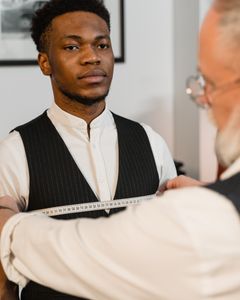
Fit. A well-fitting inexpensive outfit outperforms a poorly fitting expensive one, and it is more visible than anything else you can control.
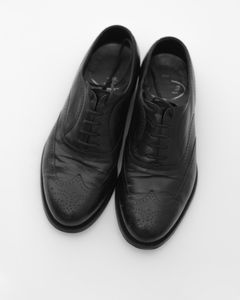
Condition. Clean, pressed, no missing buttons, shoes polished. Scuffed shoes are among the most commonly noticed details and among the easiest to fix.
Comfort. You will be sitting for an hour, possibly nervous, possibly warm. Clothing that pinches, rides up or requires adjustment will occupy attention you need elsewhere. Do a full sitting and standing test the day before.
Nothing new. Never wear something for the first time to an interview. New shoes cause blisters, new shirts have creases from packaging, and unfamiliar garments behave unpredictably.
Restraint in distraction. Strong fragrance, jangling jewellery, loud patterns and anything requiring constant adjustment all draw attention away from what you are saying.
Video interviews
Different constraints and frequently badly handled.
Solid colours read better than patterns. Fine stripes and small checks can produce moiré shimmer on camera.
Mid-tones work best. Pure white can blow out under auto-exposure and cause the camera to darken your face; black loses all detail.
Contrast with your background. If your wall is white, do not wear white.
Dress fully. Not because anyone will see, but because standing up unexpectedly is a real risk and because the psychological effect of being properly dressed is genuine.
Check the framing. Camera at eye level, face lit from the front, and look at how the top half actually reads on screen before the call.
The underlying principle
The purpose is to remove clothing as a topic. An interviewer should finish the conversation with no particular impression of what you wore.
Which means the target is not impressive. It is appropriate, well-fitting and unremarkable — and the effort goes into making sure nothing about it registers as a decision.
Also by Noor Haddad
- Building a capsule wardrobe by subtraction rather than purchaseCapsule Wardrobe
- Cost per wear: the only shopping arithmetic worth doingShopping Smart
- Why some colours suit you: contrast and undertone, without the seasonsColour & Pattern
- Buying clothes secondhand online without being disappointedShopping Smart