Fit & Tailoring
The four alterations that change everything, and what they should cost
Most people buy clothes off the rack and wear them exactly as they came. A tailor can fix the four things that make a garment look borrowed, usually for less than the price of a shirt.
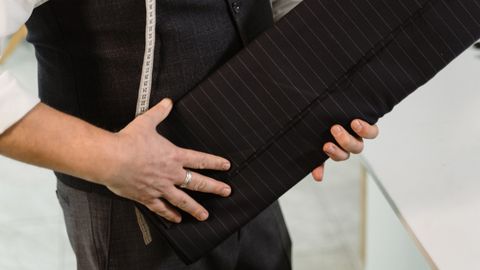
Ready-to-wear clothing is cut for an average that does not exist. Manufacturers grade a base pattern up and down, which means every size is a compromise, and the further your proportions sit from the sample size the more compromise you are wearing.
The fix has existed for centuries and most people never use it. Here are the four alterations that produce the largest visible difference, roughly in order of value.
1. Sleeve length
The single most noticeable error in menswear and one of the commonest in womenswear.
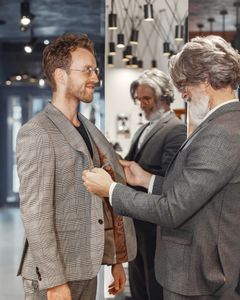
A jacket sleeve should end where the wrist meets the hand — at the base of the thumb — showing roughly a centimetre to a centimetre and a half of shirt cuff. Long sleeves make the wearer look like they are wearing someone else's jacket, and the effect is visible from across a room.
Shortening from the cuff is straightforward. If the jacket has functional buttonholes, the alteration has to be done from the shoulder, which is significantly more work and more expensive — this is the practical argument against surgeon's cuffs on ready-to-wear.
Typical cost: modest from the cuff, several times that from the shoulder.
2. Trouser hem and taper
Trousers arrive unfinished or at a standard length that suits almost nobody. The hem is the cheapest alteration available and the one most likely to be needed.
Tapering the leg from the knee down is nearly as cheap and transforms trousers cut fuller than current proportions. A tailor can take a leg in considerably without disturbing the seat or the rise, which are the parts that are difficult.
The mistake people make is asking for the taper to start at the hip. That involves the seat, the pockets and often the rise, and it is a different order of work.
Typical cost: the least expensive item on this list.
3. Waist suppression on a jacket or shirt
Bringing in the side seams so a garment follows the body rather than hanging from the shoulders like a curtain.
On a jacket, a tailor can take in the back seam and the side seams by a meaningful amount. On a shirt, darts at the back or taking in the side seams removes the balloon of excess fabric that most off-the-rack shirts carry.
The limit is the armhole. Taking a shirt in too far without adjusting the armhole produces pulling and restricts movement, which is why an aggressive taper on a cheap shirt frequently fails.
Shoulders. The shoulder seam should sit at the edge of your shoulder bone. If it does not, the garment is the wrong size — reconstructing a shoulder means dismantling the sleeve, the canvas and the lining, and typically costs more than the jacket is worth.
Buy for the shoulders and the chest. Everything below that is adjustable.
4. Trouser waist and seat
Most people's waist-to-hip ratio does not match the manufacturer's assumption, which is why so many people wear a belt cinched tight over a gaping waistband.
Taking in the centre back seam is standard and most trousers are made with enough inlay to allow it. Letting out is possible where inlay exists, which is why checking the inside of the waistband before buying is worth thirty seconds.
Finding someone
Dry cleaners frequently offer alterations, and quality varies enormously. A dedicated alterations tailor is better and rarely more expensive.
Test them with something cheap first — a trouser hem, a sleeve. Judge the result on three things: whether the stitching matches the original, whether the hem is even when you stand naturally, and whether the garment now hangs without pulling anywhere.
Ask before they cut: what are you going to do, and what will it cost. A good tailor will pin the garment on you, tell you what is and is not possible, and occasionally tell you not to bother.
The economics
This is the part that surprises people. Buying a moderately priced garment and having it altered produces a better result than buying an expensive one and wearing it as it comes.
A mid-price jacket, altered properly, will look better than a designer jacket hanging off the wrong shoulders. Fit is more visible than fabric quality at conversational distance, and considerably more visible than a label.
The practical version of this advice: budget for alterations when you buy. If a garment needs work to fit, the cost of that work is part of its price, and comparing two garments without including it is comparing the wrong numbers.
What to take to a tailor first
Go through what you already own. Almost everyone has two or three things they never wear because something about them is slightly wrong — a jacket that is too long in the sleeve, trousers that pool at the ankle, a shirt that billows.
Those garments are the cheapest wardrobe improvement available, because you have already paid for them.
Also by Gil Mowatt
- How a jacket should fit, starting with the only part you cannot changeFit & Tailoring
- How shoes are built, and why it determines whether they can be repairedShoes & Accessories
- Trouser length: the detail everyone notices and nobody mentionsFit & Tailoring
- Shoe care that actually extends the life of a pairShoes & Accessories