Fit & Tailoring
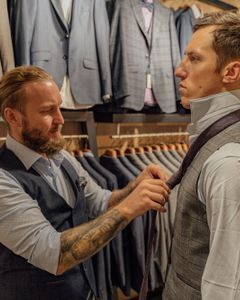
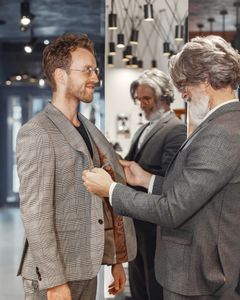
How a jacket should fit, starting with the only part you cannot change
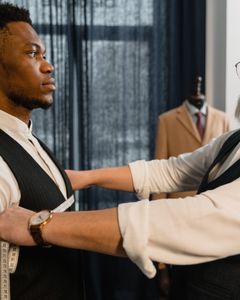
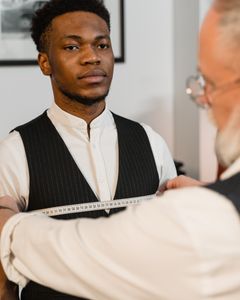
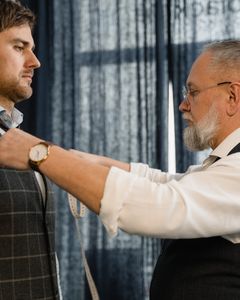
Shoulders, chest, length, sleeve. In that order, and the first one decides whether the rest is worth discussing.
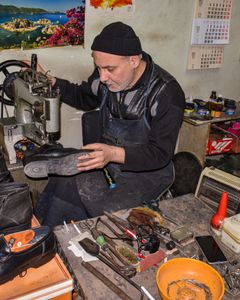
The alterations that change everything, and what they cost.
Fit & Tailoring
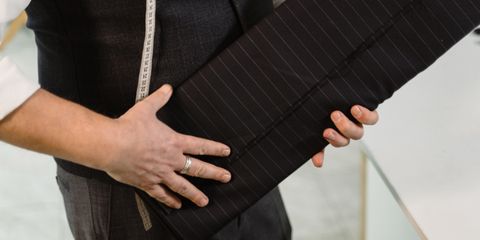
Most people buy clothes off the rack and wear them exactly as they came. A tailor can fix the four things that make a garment look borrowed, usually for less than the price of a shirt.
Fit & Tailoring
Shoulders, chest, length, sleeve. In that order, and the first one decides whether the rest is worth discussing.
Fit & Tailoring
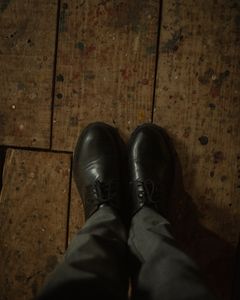
Break is the fold the trouser makes where it meets the shoe. Getting it wrong is the fastest way to look like you have not thought about your clothes, and it is the cheapest thing to fix.
Fit & Tailoring
Pear, apple, hourglass, rectangle. The categories are crude, the advice attached to them is contradictory, and the underlying principle is simpler and does not require a label.
Fit & Tailoring
Waist size is the only number most people consider and the least informative. Rise determines comfort and proportion, and it cannot be altered.
Fit & Tailoring
Bespoke, made-to-measure and off-the-peg describe three genuinely different processes, and the terms are used interchangeably by people selling the cheaper one.
Fit & Tailoring
Fewer people wear suits daily, which has made the suit more conspicuous rather than less. Worn well it reads as deliberate; worn badly it reads as an obligation.
Fit & Tailoring
Before buying anything, most wardrobes contain several garments that are almost right. Here is what a tailor can do about each of the usual complaints, and roughly what it involves.
Fit & Tailoring
The collar is the part of a shirt closest to the face and the part that determines how the shirt works with a tie and a jacket. There are perhaps six styles worth knowing.
Fit & Tailoring
Hem length is the single most consequential decision in a skirt or dress, because it creates a horizontal line at a specific point on the leg — and some points are more flattering than others.
Fit & Tailoring
Pregnancy, weight change, illness, ageing, transition. Wardrobes assume a fixed body and most bodies are not. The strategies that help are practical rather than emotional.
Fit & Tailoring
Not everyone chooses what they wear. Where a uniform, a safety requirement or a strict dress code applies, the remaining variables are fit, condition and the small number of permitted choices.