Fit & Tailoring
Skirts and dresses: length, proportion and where the eye stops
Hem length is the single most consequential decision in a skirt or dress, because it creates a horizontal line at a specific point on the leg — and some points are more flattering than others.
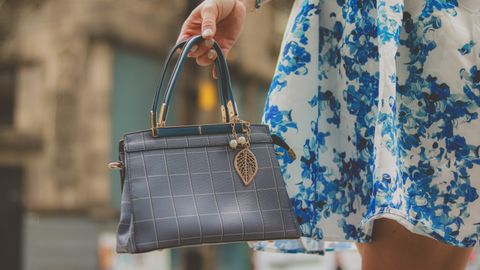
A hem creates a horizontal break. Where it falls determines how the leg reads and where the eye stops, and the effect is larger than almost any other single variable.
The principle
A hem is most flattering where the leg is narrowest, and least flattering where it is widest.
The narrow points on most legs are just above the knee, just below the knee, and the ankle. The wide points are the mid-thigh, the knee itself, and the widest part of the calf.
A hem ending at the widest part of the calf visually widens the whole leg, because it draws a horizontal line at the broadest point and stops the eye there. This is the single commonest reason a midi length feels wrong on someone — the length is right in principle and lands at the wrong point on their particular leg.
Which means hem length should be set against your leg rather than to a nominal length.
Stand sideways in front of a mirror in fitted trousers or leggings. Look at the outline of the leg from knee to ankle. Identify where the calf is widest and where it narrows below it.
Just below the widest point, where the calf begins to taper, is almost always the most flattering midi length — and it is frequently two or three centimetres from where a standard hem falls.
The lengths
Mini — above mid-thigh. Shows the most leg and reads as the most casual or the most deliberately dressed depending on the fabric.
Above the knee — the most universally flattering short length, because it ends at a narrow point.
At the knee — conservative, and it can be difficult because the knee itself is a wide, visually complex point.
Just below the knee — flattering and traditional. Ends at a taper.
Midi — mid-calf. The length most sensitive to individual leg shape, and the one where a small alteration makes the largest difference.
Ankle — ends just above the ankle bone. Flattering because the ankle is the narrowest point.
Maxi — to the floor or near it. Removes the horizontal break entirely, which is why maxi lengths lengthen so effectively, and requires the hem not to drag.
Shoes change everything
The relationship between hem and shoe determines whether the leg line continues or stops.
A shoe close in tone to the leg or the hem continues the line and lengthens.
A strongly contrasting shoe creates a second horizontal break at the ankle and shortens.
An ankle strap cuts the leg at its narrowest point, which visually shortens it — this is the most common reason a shoe that is beautiful in itself does not work with a particular hem.
A heel raises the whole proportion and changes where the hem falls relative to the calf, which is why hems should be set wearing the shoes they will be worn with.
Volume and proportion
The second variable after length.
Volume on the bottom pairs with fit on top, and vice versa. A full skirt with a voluminous top loses the waist entirely; a fitted skirt with a fitted top reads as uniformly close.
Where the waist sits determines the torso-to-leg ratio. A skirt at the natural waist produces the longest visible leg; a hip-slung skirt shortens it.
Fabric weight determines how volume behaves. A heavy fabric in a full skirt hangs in deep folds and holds a shape; a light one flares and moves. The same pattern in different weights produces entirely different garments.
Alterations worth doing
Hem length is the cheapest and highest-impact alteration available for a skirt or dress. It takes minutes and it changes the proportion of the whole outfit.
Shortening straps on a dress raises the waist seam to where it should sit, and is frequently the reason a dress does not fit despite the measurements being correct.
Taking in the waist and side seams is straightforward on simple constructions.
Adding a lining to a transparent skirt is possible and worth it for something otherwise unwearable.
Moving a bust dart is a substantial reconstruction and rarely worth the cost.
The test
Photograph yourself full length in daylight, in the shoes you will wear, and look at the image rather than the mirror.
Then ask where your eye stops. If it stops at the hem and stays there, the length is drawing attention to that point. If the eye travels down the whole silhouette, the proportion is working.
That question, applied to hems specifically, is the fastest way to learn what lengths suit you — and the answers are frequently not the ones the current fashion suggests.
Also by Noor Haddad
- Building a capsule wardrobe by subtraction rather than purchaseCapsule Wardrobe
- Cost per wear: the only shopping arithmetic worth doingShopping Smart
- Why some colours suit you: contrast and undertone, without the seasonsColour & Pattern
- Buying clothes secondhand online without being disappointedShopping Smart