Shopping Smart
Cost per wear: the only shopping arithmetic worth doing
A £300 coat worn twice a week for five years costs less per wear than a £40 one worn six times. The maths is trivial and almost nobody does it before buying.

Cost per wear is the purchase price divided by the number of times you will actually wear the item. It is a crude measure and it is the single most useful correction to how people evaluate clothes, because it reframes price as an ongoing rather than a one-off number.
A £250 wool coat worn three times a week for five months a year, over six years, is roughly 390 wears — about 64p a wear.
A £45 fast-fashion coat worn twenty times before it looks tired is £2.25 a wear. It is nearly four times more expensive.
Where the calculation goes wrong
The arithmetic is easy. The estimate is where people deceive themselves, and there are four recurring errors.
Overestimating frequency. Everyone believes they will wear the occasion dress often. Look at your own hanger data rather than your intentions — the item you bought last year for that reason is the evidence.
Ignoring maintenance. A garment that requires dry cleaning after every second wear has a substantial running cost. Ten dry cleans a year on a jacket can exceed the purchase price over its life. This is a real argument for machine-washable versions of things.
Ignoring the cost of alterations, which is part of the price of anything that needs work to fit.
Assuming price predicts durability. It correlates loosely and unreliably. A great deal of expensive clothing is expensive because of branding, and some inexpensive clothing is well made. Construction quality is what you should be assessing, and it is visible if you look.
Things you need rarely. A morning suit for one wedding has a terrible cost per wear no matter what you pay — which is an argument for hiring, not for buying a cheap one.
Trend pieces. If you like something because it is current, be honest that its life is short and buy accordingly.
Things that will not fit next year. Children, pregnancy, a body in transition.
What actually determines how long a garment lasts
Since the whole calculation depends on the denominator, this matters more than the price.
Fabric weight and fibre. Heavier cloth and longer-staple fibres last longer. Natural fibres in general age better than synthetics, which pill permanently and go shiny at friction points.
Seam construction. Turn the garment inside out. Are seams finished — overlocked, French, or bound — or raw and fraying? Are there flat-felled seams at points of stress? Is the stitch density high, or can you see gaps between stitches?
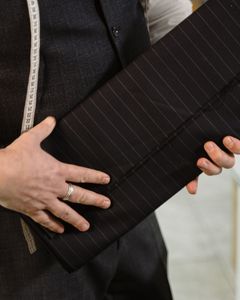
Pattern matching. On striped or checked fabric, do the patterns line up at the seams, especially at the centre back and where sleeves meet the body? Matching wastes fabric and takes time; a manufacturer who does it is not cutting corners elsewhere either. This is the single most reliable quick quality indicator available.
Buttons and fastenings. Are buttons sewn with a shank — a small stem of thread allowing the button to sit properly — or flat against the fabric? Are there spare buttons? Are zips branded, and do they run smoothly?
Linings and inlay. Is there enough seam allowance inside to let the garment out later? A generous inlay signals a manufacturer expecting the garment to be altered and kept.
The wear-count question that clarifies everything
Before buying, ask: when specifically will I wear this? Not "for work" but "on which day, doing what, with which other garments I own."
If you cannot name three specific occasions in the next month, the cost per wear is going to be worse than you think.
The thirty-wear pledge
Popularised by the campaigner Livia Firth, the idea is simply to ask whether you will wear a garment at least thirty times before buying it.
It is a blunt heuristic and it works, because it forces the frequency question at the point of decision rather than in retrospect. Thirty wears is not a high bar for anything genuinely useful, and it is an impossible one for most impulse purchases.
Where the argument for buying cheap holds
Worth being fair about. Cost per wear reasoning is easier to follow with money in hand. Someone who needs a coat this week and has £45 cannot buy the £250 one, and telling them the expensive coat is cheaper in the long run is unhelpful.
The practical route in that situation is secondhand. A well-made wool coat from ten years ago, in good condition, frequently costs less than a new synthetic one and will outlast it comfortably. That is where the two arguments — buy better, and spend less — stop being in conflict.
Also by Noor Haddad
- Building a capsule wardrobe by subtraction rather than purchaseCapsule Wardrobe
- Why some colours suit you: contrast and undertone, without the seasonsColour & Pattern
- Buying clothes secondhand online without being disappointedShopping Smart
- Pattern, scale and the reason your check shirt does not workColour & Pattern