Colour & Pattern
Why some colours suit you: contrast and undertone, without the seasons
Seasonal colour analysis has a cult following and a shaky basis. The two underlying variables it gestures at are real, simple, and you can assess them yourself in daylight.
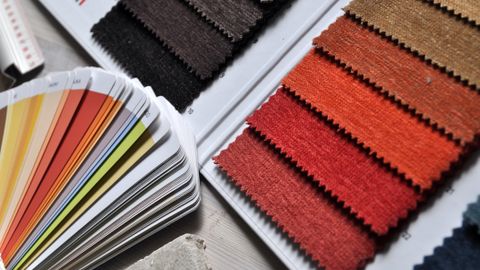
Seasonal colour analysis — the system that sorts people into Spring, Summer, Autumn and Winter — was popularised by Carole Jackson's 1980 book Color Me Beautiful and has been elaborated since into systems with twelve or sixteen categories.
It is worth saying plainly that there is no scientific basis for the system as such, that practitioners frequently disagree about the same person, and that the categories are not natural kinds.
Underneath it, though, are two genuine variables that do affect how colours look on a person. They are worth assessing directly rather than through the system.
Variable one: undertone
Skin has a surface tone — how light or dark, how much it tans — and an undertone, the subtle cast beneath it. Undertone is usually described as warm (golden, peachy, yellow), cool (pink, red, blue) or neutral.
Undertone does not change with a tan and is largely independent of how light or dark your skin is. People of every skin tone have all three undertones.
How to assess it:
- Jewellery test. Hold gold and silver against your face in daylight, without makeup. One usually makes your skin look brighter and more even; the other can make it look sallow or grey. Gold favouring suggests warm, silver cool, both looking fine suggests neutral. This is the most reliable of the informal tests.
- White test. Hold pure optic white and cream against your face. Cool undertones generally look better against pure white; warm undertones against cream.
- Vein test. Widely cited and the least reliable — vein colour depends heavily on skin thickness and lighting.
Do all of this in north-facing daylight. Indoor lighting has a strong colour cast and will give you the wrong answer.
The more useful of the two, and the more neglected. Look at a photograph of yourself, and convert it to greyscale on your phone.
High contrast: a large gap between hair, skin and eyes in the greyscale image — dark hair with light skin, for example. High-contrast people are generally flattered by high-contrast outfits: navy and white, black and cream, strong colour against neutral.
Low contrast: hair, skin and eyes read at similar tonal values. Low-contrast people are usually better served by tonal, blended combinations — and strong contrast can overwhelm them, with the clothes rather than the face drawing the eye.
Why greyscale works
Because it removes hue and shows you value — lightness and darkness — which is what actually governs whether an outfit reads as harmonious or jarring.
Most people who feel that black "doesn't suit them" have low contrast colouring: black is the darkest possible value, and against a low-contrast face it creates a gap the face cannot match. The same person often looks excellent in charcoal, navy or deep brown.
The greyscale test also explains outfits generally. Take a photograph of a look you like on someone else and desaturate it — the value relationships are usually doing more work than the colours.
The practical version
Warm undertone: tends to be flattered by warmer versions of colours — cream rather than white, olive rather than emerald, camel and rust and warm browns, coral rather than fuchsia, gold rather than silver.
Cool undertone: pure white, navy, grey, true red, emerald, blues and purples, silver.
Neutral: most things, with the freedom to choose by contrast level instead.
Note that these are tendencies rather than rules, and the effect is subtle. Nobody looks actively bad in a colour outside their undertone; they look marginally less good, and mostly in the skin around the face.
The escape hatch
All of this applies principally to what you wear near your face, because that is where reflected colour affects how your skin reads.
Trousers, skirts and shoes are well away from the face and largely exempt. If you love a colour that does not suit you, wear it below the waist, or put a neutral layer between it and your face — which is exactly what a scarf, a collar or an open shirt over a t-shirt does.
What to ignore
Any system that tells you a fixed list of forbidden colours. Any analysis performed under artificial light. Any claim that this is settled science.
What to keep: hold things against your face in daylight, look at the skin rather than the garment, and photograph yourself in greyscale. Those three habits will tell you more about what suits you than any category ever will.
Also by Noor Haddad
- Building a capsule wardrobe by subtraction rather than purchaseCapsule Wardrobe
- Cost per wear: the only shopping arithmetic worth doingShopping Smart
- Buying clothes secondhand online without being disappointedShopping Smart
- Pattern, scale and the reason your check shirt does not workColour & Pattern