Shopping Smart
Buying clothes secondhand online without being disappointed
The resale market has made good clothing accessible at a fraction of retail. It has also made it easy to buy something that arrives in the wrong size, condition or colour entirely.
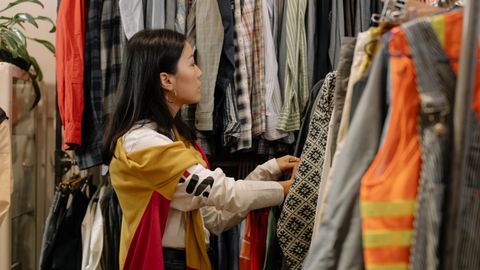
Secondhand is where the two competing pieces of clothing advice — buy better quality, and spend less — stop being in conflict. A well-made wool coat from fifteen years ago frequently costs less than a new synthetic one and will outlast it comfortably.
The obstacle is that you cannot try it on, and the ways this goes wrong are predictable enough to be avoided.
Ignore the size label entirely
The most important habit. Sizing has drifted enormously over decades — vanity sizing means a garment labelled 12 in 1995 is closer to an 8 today, and the drift is neither consistent nor documented. Sizing also varies wildly between countries and brands.
What matters is measurements. Ask for them, or refuse to buy.
The measurements that matter, taken flat and doubled where relevant:
- Tops: pit to pit (chest, flat), shoulder to shoulder, sleeve length from shoulder seam, total length from the base of the collar.
- Trousers: waist flat, rise (front waistband to crotch seam), inseam, leg opening.
- Jackets: as tops, plus whether there is inlay at the side seams.
- Shoes: insole length, measured inside heel to inside toe. Far more reliable than the marked size.
Take your best-fitting garment in each category — the shirt that fits perfectly, the trousers you always reach for — and measure it flat. Write the numbers down and keep them on your phone.
Then you are not guessing at sizes; you are comparing numbers. This one habit eliminates most secondhand disappointment.
Judging condition from photographs
Sellers photograph flatteringly, and most are not being dishonest so much as not looking closely.
Ask for photographs of the specific failure points, and be specific about which: underarms, collar and cuffs, the seat of trousers, the crotch seam, elbows, and the inside of the hem.
Ask about smell. Cigarette smoke and mildew are the two that are extremely difficult to remove, and neither photographs. It is a reasonable question and honest sellers answer it.
Watch for the phrases that mean damage. "Some bobbling", "small mark", "as seen in photos", "vintage condition", "sold as seen". Ask for clarification on all of them.
Zoom in on dark fabrics. Wear, shine at friction points and pilling are hard to see in a standard photograph on black or navy. Ask for a close-up under natural light.
What is worth buying secondhand
Outerwear. Coats are expensive new, are worn over other clothes so fit is forgiving, and a good wool coat lasts decades.
Knitwear, if you check for pilling and moth damage. Cashmere secondhand is one of the best value propositions available.
Denim. Already broken in, and vintage denim is frequently better made than current equivalents.
Tailoring. Suits and blazers are among the most under-priced items on resale, because fewer people wear them. Buy for the shoulders and have the rest altered.
Leather goods. Bags and belts age well and are ruinously expensive new.
Silk and fine cottons, where the fabric quality of older garments is often noticeably better.
What to be careful with
Shoes. They mould to the previous owner's foot, and the wear pattern on the sole and the shape of the footbed will not match yours. Lightly worn is fine; heavily worn rarely is.
Anything with elastane. Elastane degrades over time regardless of use, and a stretch garment from ten years ago may have lost its recovery entirely — it will bag out within an hour.
White and pale fabrics, where age yellowing at collars and underarms is common and sometimes permanent.
Anything requiring a precise fit that cannot be altered — shoulders, shoe width.
Checking for moths
Worth its own note, because a moth infestation transferred into your wardrobe is expensive.
Look for small irregular holes, particularly in wool and cashmere, near seams and folds. Look for fine webbing and small pale larvae. Ask directly.
Whatever the answer, quarantine everything on arrival: seal it in a bag and freeze for at least 72 hours, or wash at the highest temperature the garment permits. This kills eggs and larvae, and it is worth doing as routine.
Practical mechanics
Check the returns policy before buying — many private sellers offer none, and platform buyer protection varies.
Search by measurement terms rather than size where the platform allows. Search misspellings of brand names, which is a genuine trick — badly listed items get fewer views and sell cheaper.
Set alerts for specific items rather than browsing, which reduces both cost and impulse buying.
And factor in the alterations. A secondhand jacket at a third of retail, plus tailoring, is still an excellent purchase — and it is the purchase, not the bargain, that you should be evaluating.
Also by Noor Haddad
- Building a capsule wardrobe by subtraction rather than purchaseCapsule Wardrobe
- Cost per wear: the only shopping arithmetic worth doingShopping Smart
- Why some colours suit you: contrast and undertone, without the seasonsColour & Pattern
- Pattern, scale and the reason your check shirt does not workColour & Pattern