Fabric & Care
Why knitwear pills, and what actually stops it
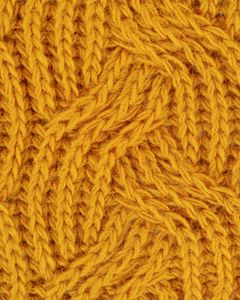
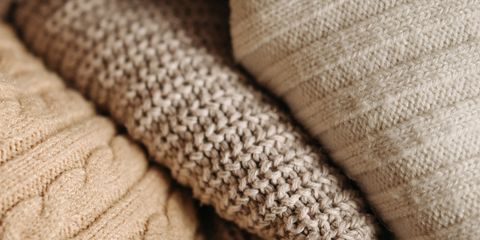
Pilling is not a sign of cheapness, exactly. It is a sign of short fibres, loose twist and friction — and two of those three are under your control.
What cloth does over time, and how to stop ruining it.
Fabric & Care
GSM and ounces per yard are printed on more labels than they used to be, and almost nobody knows how to read them. They predict drape, durability and whether a shirt will be transparent.
Fabric & Care
Pilling is not a sign of cheapness, exactly. It is a sign of short fibres, loose twist and friction — and two of those three are under your control.
Fabric & Care
Most garment wear happens in the washing machine, not on the body. Reducing frequency is the single largest thing you can do to make clothes last, and the rules are simpler than they sound.
Fabric & Care
Every fibre is a set of trade-offs between warmth, moisture handling, strength and how it behaves when wet. Knowing them makes composition labels informative rather than decorative.
Fabric & Care
The most common garment in the world, and the one where quality differences are easiest to see if you know the six details to check.
Fabric & Care
The vocabulary around jeans is denser than around almost any other garment, and much of it is marketing. Three of the terms genuinely change what you are buying.
Fabric & Care
Creases are a fibre problem with a physics solution. Understanding what heat and moisture are actually doing makes the difference between pressing a shirt properly and glazing it permanently.
Fabric & Care
A button, a hem, a seam, a moth hole and a snagged knit. Between them these account for most of what sends wearable clothing to landfill, and four of the five take under fifteen minutes.
Fabric & Care
Two jumpers in the same fibre at the same price can behave completely differently. The variables are gauge, ply and how the pieces are joined, and none of them appear on the label.
Fabric & Care
Five basic shapes, a handful of modifiers, and a system almost nobody has ever been taught. The labels are more informative than they look, and one of them is routinely misread.
Fabric & Care
Most damage to stored clothing happens while it is stored. Moths, mildew, permanent creasing and distortion are all preventable, and the prevention is mostly free.
Fabric & Care
The instinct is to wear less. The better answer is loose, light, open-weave natural fabric — which is what people in genuinely hot climates have always worn.
Fabric & Care
Insulation works by holding still air. Understanding that explains why down beats a thick jumper, why wet insulation fails, and why the wind matters more than the temperature.