Fabric & Care
Why knitwear pills, and what actually stops it
Pilling is not a sign of cheapness, exactly. It is a sign of short fibres, loose twist and friction — and two of those three are under your control.
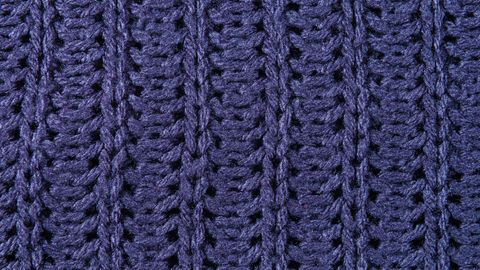
A pill is a small ball of tangled fibre sitting on the surface of a fabric. It forms when short fibre ends work their way out of the yarn through abrasion, then tangle together into a knot that stays attached by a few anchoring fibres.
Understanding that sequence explains everything about which garments pill and what to do about it.
What makes a fabric prone to it
Short staple length. Staple is the length of the individual fibres in a yarn. Short fibres have more ends per unit of yarn, and every end is a potential pill. This is the single biggest factor.
Cashmere is a good example of the trade-off. The fineness that makes it feel extraordinary comes with a relatively short staple, and cheap cashmere uses the shortest fibres of all — often recycled or from lower grades — which is why a bargain cashmere jumper can pill within three wears while a good one goes years.
Loose twist. Softly spun yarn feels lovely and lets fibres migrate outward easily. Tightly twisted yarn holds fibres in and pills far less, at the cost of a firmer hand.
Fibre strength. This is the counter-intuitive part. Weak fibres — wool, cotton, cashmere — form pills that eventually break off on their own. Strong synthetic fibres — polyester, nylon, acrylic — form pills that will not detach, which is why a polyester-blend jumper accumulates pills permanently while a pure wool one sheds them.
A wool-synthetic blend is frequently the worst of both: wool provides short fibres to form pills, synthetic provides the strength to keep them attached.
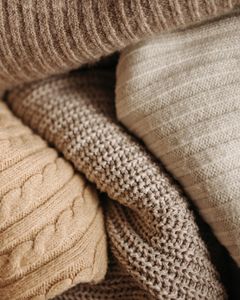
Loose knit structure. Open gauge knits have more room for fibres to move.
Always at friction points, which is why the pattern is so predictable: under the arms, where the arm rubs the body · at the sides, where a bag strap sits · on the forearms, from desks and armrests · at the back, from car seats and chairs. If a garment pills evenly all over, it is a fibre quality problem. If it pills in patches, it is friction.
Reducing it
Wash less. Agitation in a machine is the single largest source of abrasion most knitwear experiences. Wool and cashmere are naturally odour-resistant and self-cleaning to a degree; airing a jumper overnight is frequently sufficient and considerably kinder than washing it.
Wash inside out, cold, on a gentle or wool cycle, with a low spin. Use a mesh laundry bag for knitwear.
Use a proper wool detergent. Standard biological detergents contain protease enzymes that digest protein, and wool, cashmere and silk are proteins. This does real damage over time.
Never tumble dry. Tumble drying is abrasion plus heat plus mechanical action, which is the complete list of things that damage knitwear.
Dry flat. Hanging a wet knit stretches it out of shape under its own weight.
Rotate. Wearing the same jumper three days running gives fibres no chance to recover and concentrates abrasion.
Removing pills properly
Once formed, pills should be removed rather than lived with — they attract more pills and make the garment look worn out.
A fabric shaver — an electric device with a rotating blade behind a guard — is the best option and inexpensive. Lay the garment flat, do not stretch it, and work in short passes without pressing.
A cashmere comb or sweater stone for delicate items, which is gentler and slower.
A disposable razor works and is risky — lay the garment on a flat surface, hold it taut without stretching, and use very light strokes. It is easy to cut through a knit this way, particularly at the seams.
Avoid the sticky-roller and sellotape approach, which removes loose fluff and does nothing for attached pills.
What to look for when buying
Rub the fabric briskly between your palms for fifteen seconds in the shop. If fibres start balling immediately, it will pill.
Check the fibre content. Long-staple merino, lambswool, Geelong and grade A cashmere from reputable sellers all pill less. Anything listing a wool-acrylic or wool-polyester blend at a low price will pill and keep the pills.
Feel the twist. A yarn that feels firm and springy rather than fluffy and soft will hold together better. Very soft, brushed, cloud-like knitwear is soft precisely because the fibres are loose, and it will pill.
And be sceptical of very cheap cashmere. The fibre is expensive; a low price means short fibres, and short fibres mean pills within weeks.
The reassurance
Good wool and good cashmere pill a little at first and then largely stop. The initial pilling is short fibres working out of the yarn — once they are gone, the remaining long fibres are stable. Shave it twice in the first season and it will settle.
A garment that is still pilling heavily in its second year is telling you something about what it is made of.