Capsule Wardrobe
A wardrobe that works for the life you have
Most wardrobes are built for an imagined week rather than the real one. The mismatch is measurable, and correcting it is the cheapest improvement available.
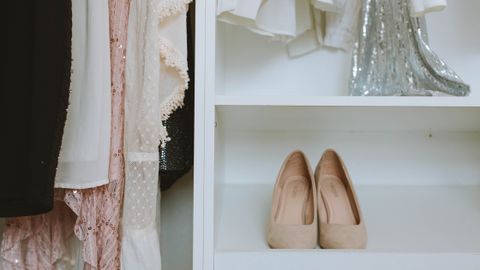
Wardrobes accumulate rather than get designed. They reflect a mixture of past lives, aspirational purchases, gifts, and things bought for occasions that did not recur.
Which is why so many people have a full wardrobe and nothing to wear on an ordinary Tuesday.
The mismatch, measured
Divide a typical week into the contexts you actually occupy, and estimate the proportion of waking hours in each.
Work. Home. Exercise. Errands and shopping. Social. Formal or special occasion.
Then estimate the proportion of your wardrobe allocated to each.
The typical result is stark. Someone who works from home four days a week and goes to an office once frequently has a wardrobe weighted toward the office and owns almost nothing they feel presentable in at home. Someone who spends most weekends outdoors owns three coats for town and one that is genuinely waterproof.
The occasion category is the most consistently over-represented. Formal wear occupies a disproportionate share of most wardrobes and a very small share of most lives.
The gap people most often have is not formal or casual but the space between them — clothes that are presentable enough to answer the door, meet a friend, or appear on a video call, and comfortable enough to wear for eight hours at home.
This category barely existed as a wardrobe concept twenty years ago and now describes most people's largest single time block. Almost nobody has enough of it.
Building for the real distribution
Weight the wardrobe to the hours. If most of your time is at home or in casual contexts, most of the wardrobe should serve that, and it should be good — comfortable clothing that you feel fine being seen in, rather than the worn-out things that get demoted to home wear.
Cover the occasional properly but minimally. One good outfit for formal occasions is sufficient for most people. Two if the occasions are frequent enough. Beyond that, hiring is a genuine option for anything rare and expensive.
Buy for the conditions you are actually in. This sounds obvious and is regularly ignored. If you commute on foot in a wet climate, a waterproof coat matters more than a wool one. If you carry a laptop daily, a bag that distributes weight matters more than one that looks right.
The specific gaps to check for
Something to wear when it rains that you do not resent. Most people own an inadequate compromise here.
Something comfortable and presentable for home. Not old gym clothes.
Something for the temperature between seasons. The October and April gap, where a winter coat is too much and a jacket is not enough. This is the single most common wardrobe hole and it is filled by a mid-layer — an overshirt, a quilted liner, a heavier knit.
Something for being on camera. If video calls are a regular part of your week, at least two tops that read well on screen — solid mid-tones, contrasting with your background — is a small and specific fix.
Something to wear while doing something. Cooking, gardening, decorating, moving things. Clothes you do not have to be careful in.
The transitions
An under-considered category: outfits that have to work across two contexts without a change.
School run then a meeting. Office then dinner. Working from home then going out. A wardrobe that handles these needs pieces that shift formality with one adjustment — a jacket added, shoes changed, a knit swapped.
This is a strong argument for the versatile middle pieces — the fine knit, the plain trousers, the clean shoes — and against garments that only work in one register.
When life changes
The most common reason a wardrobe stops working is that the life it was built for ended and nobody updated it.
New job. Working from home. Retirement. A new baby. Moving to a different climate. A change in body. Each of these should trigger a deliberate review, and almost none of them do — people continue buying to a pattern set by a life they are no longer living.
The signal that this has happened: repeatedly having nothing to wear despite a full wardrobe. That is a distribution problem, not a quantity one, and buying more of the same will not fix it.
The practical exercise
Take a week and write down what you actually did each day and what you actually wore. Not what you would have liked to wear — what you wore.
At the end of the week you will have an accurate picture of your real distribution and, usually, a short and specific list of gaps.
That list is worth considerably more than any guide to essentials, including the ones on this site.
Also by Noor Haddad
- Building a capsule wardrobe by subtraction rather than purchaseCapsule Wardrobe
- Cost per wear: the only shopping arithmetic worth doingShopping Smart
- Why some colours suit you: contrast and undertone, without the seasonsColour & Pattern
- Buying clothes secondhand online without being disappointedShopping Smart