Capsule Wardrobe
Getting dressed faster: the systems that remove the daily decision
Standing in front of a full wardrobe with nothing to wear is a search problem, not a shortage. Four organisational changes remove most of it.

The morning difficulty is almost never that there is nothing to wear. It is that finding the combination that works requires assembling it mentally from components that are stored separately and are not all visible.
Which makes it a retrieval problem, and retrieval problems have organisational solutions.
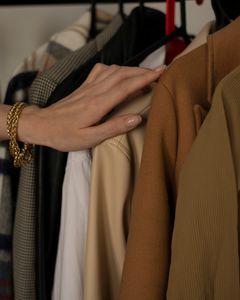
1. Make everything visible
Anything you cannot see does not get worn. This is the single largest factor.
Clothes at the back of a wardrobe, in drawers under other clothes, in boxes, or on a high shelf are effectively not in your wardrobe. People consistently wear the front third of a rail and the top layer of a drawer.
Practical fixes: file-fold in drawers — folding so garments stand vertically and each is visible from above, rather than stacking horizontally. Open shelving where possible. Removing out-of-season clothes entirely so the current rail is not diluted.
The last of these is unpopular and very effective. A rail with only wearable-today clothing on it is a completely different object from one containing everything.
2. Organise by outfit logic, not by type
Most wardrobes are organised by garment category — all shirts together, all trousers together. This is tidy and it is exactly the wrong structure for the task, because it requires you to construct combinations mentally.
Alternatives that work better:
By colour within category, which makes coordination visible at a glance.
By formality, so the section you need for today's context is contiguous.
By outfit, hanging complete combinations together. Extreme and highly effective for anyone with a small number of frequently repeated looks.
The most useful single habit. When an outfit works, photograph it. Keep an album on your phone.
Getting dressed then becomes selecting from a list of known-good options rather than constructing from scratch. It also reveals, over a few months, which garments appear repeatedly and which never do — which is a wardrobe audit conducted passively.
4. Decide the night before
The oldest advice on the list and the most reliably effective.
Choosing an outfit the evening before removes the decision from a time-pressured morning, allows you to check the weather and the day's commitments, and — significantly — reveals problems while there is still time to fix them. A missing button, an unpressed shirt or an unwashed item discovered at 8am is a crisis; discovered at 10pm it is a two-minute task.
For anyone with an unpredictable schedule, deciding a small number of outfits at the start of the week works similarly.
The supporting habits
Deal with laundry promptly. A large proportion of "nothing to wear" is "everything I want to wear is in the basket". Removing clothes from the machine immediately also prevents most creasing.
Keep a small ready set. Two or three complete outfits that are always clean, pressed and available. This is insurance against a bad week.
Fix things immediately. A missing button or a fallen hem removes a garment from circulation until it is fixed, and the fixing gets deferred indefinitely. Keep a small mending pile and clear it monthly.
Keep a donate bag permanently. Anything you try on and reject goes straight in rather than back on the rail, where it will be tried on and rejected again next month.
Store accessories with the outfits rather than separately, so that the belt and the scarf are part of the retrieval rather than a second search.
What the systems are actually buying
Not, primarily, time — though ten minutes a day is sixty hours a year.
What they buy is reliability. The value is in never leaving the house uncertain about how you look, which is a small and persistent drain that most people carry without noticing.
And they buy accurate information. A photographed record of what you actually wore, over months, is better data about your wardrobe than any amount of introspection — and it is the thing that makes future purchases sensible rather than aspirational.
The failure mode
Over-systematising. A wardrobe organised to a scheme so elaborate that maintaining it is itself a chore will collapse within a month.
The four changes above are chosen because they are low-maintenance: visibility, colour order, a photo album, and deciding the night before. None requires ongoing effort beyond the initial setup, which is why they survive contact with a normal life.
Also by Noor Haddad
- Building a capsule wardrobe by subtraction rather than purchaseCapsule Wardrobe
- Cost per wear: the only shopping arithmetic worth doingShopping Smart
- Why some colours suit you: contrast and undertone, without the seasonsColour & Pattern
- Buying clothes secondhand online without being disappointedShopping Smart