Capsule Wardrobe
Packing a suitcase so the clothes arrive wearable
Rolling versus folding is the wrong argument. What actually determines whether things arrive creased is fabric choice, layering and how tightly the case is packed.
Creasing happens when fabric is bent and compressed for long enough for the fibres to set in the new position. Everything about good packing follows from reducing bends, reducing compression, or choosing fabrics that do not set.
The fabric decision comes first
The largest variable and the one made before anything is packed.
Crease-resistant: wool, particularly high-twist worsted; knits of any kind; polyester and blends; heavier fabrics generally; textured weaves such as twill, hopsack and seersucker.
Creases badly: linen, which has no elasticity and sets permanently; lightweight cotton in a plain weave; silk; rayon and viscose.
A trip packed in wool and knits arrives essentially ready to wear. The same trip packed in linen and poplin arrives requiring an iron regardless of technique.
Rolling versus folding
The argument is overstated and both work in different situations.
Rolling suits knitwear, t-shirts, jeans, casual trousers and anything soft. It produces soft curved creases rather than sharp folds, and packs efficiently into gaps.
Folding suits structured garments, shirts, tailored trousers and anything you want to keep a crease in. The fold lines should be at existing seams and existing creases where possible.
Bundling — wrapping garments around a central core of soft items, in decreasing order of wrinkle-resistance — is the technique that produces the fewest creases and takes the longest. Worth it for a suit; excessive for a weekend.
Pack tightly. A full case in which nothing moves creases less than a half-empty one where things shift. Fill gaps with socks and underwear.
Use tissue paper at every fold in anything delicate. It prevents the fold from setting sharply and is what luggage packers have always done.
Packing a suit
The garment most people worry about.
Turn the jacket half inside out: put one shoulder inside the other, so the outer fabric is protected and the shoulder structure is supported. Fold once lengthwise, and lay it on top of everything else.
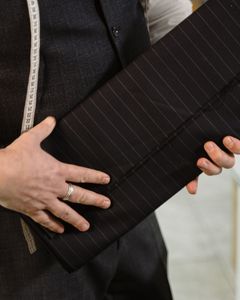
Fold trousers along their existing crease and lay them flat.
Place both on top rather than at the bottom, and unpack immediately on arrival. A wool suit hung in a bathroom during a hot shower will recover from most travel creasing in fifteen minutes.
Shoes
The heaviest and most awkward items.
Pack them in the bottom of the case, along the hinge, where the weight sits best. Stuff socks inside them, which saves space and holds their shape. Put each pair in a bag — a shoe bag, or a shower cap, which is the standard hotel trick.
Wear the heaviest pair while travelling.
Building the travel capsule
The purpose is to pack the fewest items that produce the most outfits, which is a colour discipline problem more than a quantity one.
One neutral base — everything works with everything, which is the entire point.
Two pairs of shoes maximum for most trips: one comfortable for walking, one dressier.
Layers rather than heavy items. A shell, a mid layer and a base layer covers a wider temperature range than one warm coat and packs smaller.
Count tops against bottoms. Four tops and two bottoms produce eight combinations. Four tops and four bottoms produce sixteen and weigh considerably more.
One thing that dresses the whole set up — a jacket, a scarf, a pair of shoes — rather than a separate evening outfit.
What actually gets over-packed
Consistently: too many tops, too many shoes, and clothes for activities that will not happen. The rule of thumb that survives contact with reality is to lay out everything you intend to take and remove a third.
Laundry is available almost everywhere and washing two things in a sink extends a small capsule considerably.
On arrival
Unpack immediately. Creases set over hours, and a garment hung within twenty minutes of arriving is usually fine.
Hang everything, including things you are not wearing that day.
Use the bathroom. A hot shower with the door shut and garments hanging removes most travel creasing from wool and many synthetics. It does nothing for linen.
A travel steamer is small, cheap and more useful than a hotel iron, which is frequently poor and occasionally dirty.
The one packing decision that matters most
Wearing the bulkiest items — the coat, the heaviest shoes, the jacket — rather than packing them.
It costs nothing, it frees the most space of any single decision, and it means the items least likely to crease well are not in the case at all.
Also by Noor Haddad
- Building a capsule wardrobe by subtraction rather than purchaseCapsule Wardrobe
- Cost per wear: the only shopping arithmetic worth doingShopping Smart
- Why some colours suit you: contrast and undertone, without the seasonsColour & Pattern
- Buying clothes secondhand online without being disappointedShopping Smart