Capsule Wardrobe
The wardrobe audit: three months of data, one afternoon of decisions
Everyone thinks they know what they wear. Almost nobody is right, and the gap between belief and behaviour is where most wasted money sits.

The purpose of an audit is not to throw things away. It is to find out what you actually wear, so that future purchases are informed by evidence rather than by aspiration.
The data-gathering phase
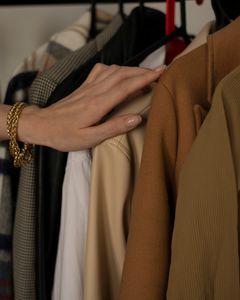
Turn every hanger backwards. Put anything folded in drawers into a designated position. As you wear and return things, hang them forwards and move drawer items to the other side.
Do nothing else for three months. A shorter period biases toward one season; a longer one is better if you can wait.
Photograph the wardrobe before you start, which is useful later when you cannot remember why you kept something.
The sorting
After three months, everything divides into three groups.
Worn regularly. These are the answer to the question "what do I actually wear". Study them, because they are telling you something specific about colour, fit, weight and formality that you probably could not have articulated.
Worn once or twice. The ambiguous middle. Something is preventing regular wear, and the useful question is what.
Unworn. The category that requires decisions.
Interrogating the unworn
Try each item on. Not hold it up — put it on, in daylight, and look properly.
Does it fit the body you have now? Not the one you had, or intend to have. Clothes kept for a future body occupy space and generate guilt every time you see them, which is a poor return on a garment.
Is it comfortable? Anything that itches, gapes, slides, rides up or requires adjustment will lose to the comfortable alternative every time. This is the single commonest reason things go unworn and it is rarely diagnosed.
Does it need something? Alteration, repair, a missing button, a partner garment you do not own. Make a specific list — most of these are cheap fixes and the garment is already paid for.
Does it go with three things you own? Orphans stay unworn. An orphan can sometimes be rescued by one deliberate purchase, and sometimes it should go.
Do you like it? The question people skip. A garment you own out of obligation — a gift, an expensive mistake, something that suits you objectively — will not get worn, and the sunk cost is already sunk.
For anything you cannot decide about: put it in a box, seal it, date it, and store it out of sight. Open it in six months. Anything you have not missed, and cannot remember owning, goes.
This works because it defers the decision without keeping the item in circulation, and it defuses the anxiety that stops people making the call in the first place.
What the worn pile tells you
This is the analytical part and it is where the value is.
Lay out everything you wore regularly and look for patterns.
Colour. Most people's worn pile is far narrower in colour than their wardrobe. That narrow range is your actual palette, and buying inside it means everything will combine.
Fit and cut. Are the worn items looser or more fitted than the unworn? Higher or lower necklines? This is frequently the difference between what you buy and what you wear.
Fabric. People gravitate toward specific weights and textures without noticing. If everything you wear is soft and everything unworn is stiff, that is a buying instruction.
Formality. Compare the formality distribution of your worn pile against your actual week. Most wardrobes are dressier than the life they serve.
Making the gap list
Now, and only now, work out what is missing.
Not from a list of essentials. From the specific occasions in the last three months where you had nothing appropriate, improvised, or felt wrong.
Write those down as problems rather than products: "nothing warm enough for the school run that I don't feel scruffy in" is a better brief than "need a coat", because it specifies the constraints.
Disposal
Worth doing properly rather than putting it all in one bag.
Good condition, current, desirable brands — resale platforms. This recovers money and extends the garment's life.
Good condition, ordinary — charity shops, though be aware that a large proportion of donated clothing is not sold locally and enters export markets with mixed consequences.
Worn out — textile recycling, not landfill. Many councils and retailers collect. Damaged textiles are shredded for insulation and industrial wipes.
Nearly good — repair it. A missing button or a small tear is twenty minutes and returns a garment to circulation.
Maintaining it
The audit only works once unless something changes.
Keep the hangers backwards permanently. It costs nothing and the data keeps accumulating.
One in, one out, which forces a direct comparison at the point of purchase.
A running gap list on your phone, added to when you notice a genuine need rather than when you are in a shop.
The result is not a smaller wardrobe as an end in itself. It is a wardrobe where a much larger proportion of what you own is in use, which is the actual goal and the one that saves money.
Also by Noor Haddad
- Building a capsule wardrobe by subtraction rather than purchaseCapsule Wardrobe
- Cost per wear: the only shopping arithmetic worth doingShopping Smart
- Why some colours suit you: contrast and undertone, without the seasonsColour & Pattern
- Buying clothes secondhand online without being disappointedShopping Smart