Capsule Wardrobe
What to wear when the dress code says nothing useful
Smart casual, business casual, cocktail, black tie optional. The terms are used loosely and mean different things by country and context, but they are not infinitely elastic.
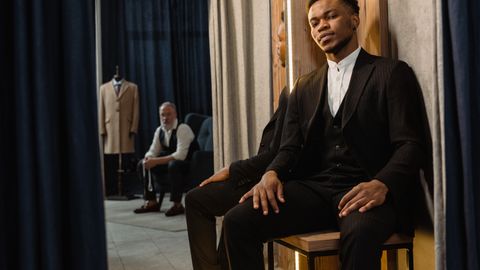
Dress codes exist on a spectrum of formality, and the terms are best understood as regions on it rather than as fixed rules. The useful skill is reading the actual signal — the venue, the time, the host, and what people wore last time.
The spectrum, most formal first
White tie. Rare — state occasions, some ceremonies, a handful of balls. Black tailcoat, white piqué waistcoat, white bow tie, wing collar. For women, a full-length evening gown. If you are attending one, the invitation will be explicit and there will be a hire shop.
Black tie. Dinner jacket in black or midnight blue, with satin or grosgrain facing on the lapels. Matching trousers with a stripe down the leg. White dress shirt, black bow tie — self-tied, ideally. Black patent or highly polished shoes. No belt; use braces, and a cummerbund or low waistcoat.
For women, a floor-length gown, or a formal cocktail dress, or dressy separates.
Black tie optional means black tie is welcome and a dark suit with a conservative tie is equally correct. It is a courtesy for people who do not own a dinner jacket, not an invitation to dress down.
Cocktail. A dark suit with a tie for men. For women, a knee-length or midi dress, or elevated separates. Cocktail is dressy without being formal, and it is the code that varies most by venue.
Business formal. A matched suit in a conservative colour — navy, charcoal, grey — with a shirt and tie. Leather dress shoes. For women, a suit, or a dress with a jacket.
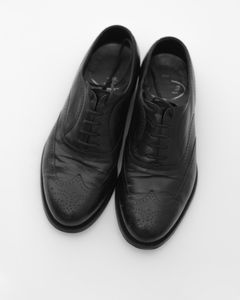
Business casual. The most contested term on the list. Generally a collared shirt with tailored trousers or chinos, no tie required, a jacket optional. Loafers, derbies or clean leather shoes. Not jeans, not trainers, not a t-shirt — though many workplaces have drifted well past that.
Smart casual. A step down again. Dark, well-fitting jeans are usually acceptable. A collared shirt, a fine knit, or a polo. A jacket lifts it substantially. Clean minimal trainers are frequently fine; running shoes generally are not.
Where is it, and at what time? Formality rises with the hour and with the venue. An evening event at a hotel is dressier than the same event at lunchtime in an office.
What is the host wearing? If you can find out, this is the most reliable single indicator. Matching the host, or being marginally less formal, is almost always correct.
The lever that does the most work
A jacket. Adding or removing a tailored jacket moves an outfit a full step on the formality scale without changing anything else.
Which means the practical strategy for uncertain occasions is to dress one notch below and carry a jacket. If everyone is dressier than expected, you put it on. If they are not, it comes off and hangs on a chair.
The equivalent lever for shoes: leather dresses up, rubber dresses down, and shoes are the element people most often get wrong because they were chosen for comfort at the last minute.
Regional and contextual variation
Country. British and Italian business dress runs more formal than American West Coast, where senior people routinely wear things that would read as inappropriate elsewhere. Northern European tech culture is informal; finance and law anywhere are not.
Industry. The same job title carries different expectations in a law firm and a design studio.
Seniority, awkwardly. Very senior people are frequently the most casually dressed in the room, and dressing like them without their position reads differently.
Religious and cultural venues may have specific requirements — covered shoulders, covered knees, head covering, removing shoes. These override the stated code and it is worth checking rather than assuming.
Weddings, which cause the most anxiety
A few conventions worth knowing.
Do not wear white, cream, ivory or anything close, unless the invitation specifically requests it. This convention is still widely held and breaking it is noticed.
Black is now generally acceptable at weddings in most Western contexts, contrary to older etiquette, particularly for evening events. It remains inappropriate in some cultures and at some religious ceremonies.
Outdoor and daytime weddings run lighter and less formal. Evening weddings run darker and dressier.
Check whether there is a ceremony in a place of worship with its own requirements, and whether there is a long period standing on grass, which is a shoe decision.
When you get it wrong
Being slightly overdressed is a minor problem, easily corrected by removing a tie or a jacket, and generally read as having made an effort.
Being noticeably underdressed is harder to fix in the moment and is the error worth avoiding. Which makes the asymmetry clear: when genuinely uncertain, err upward.
And if you arrive and are wrong, the correct response is to say nothing about it. Most people are not looking, the ones who are do not care as much as you think, and drawing attention to it is the only thing that makes it awkward.
Also by Gil Mowatt
- The four alterations that change everything, and what they should costFit & Tailoring
- How a jacket should fit, starting with the only part you cannot changeFit & Tailoring
- How shoes are built, and why it determines whether they can be repairedShoes & Accessories
- Trouser length: the detail everyone notices and nobody mentionsFit & Tailoring