Shoes & Accessories
Boots: which style for which purpose
Chelsea, chukka, derby, jodhpur, work. Each was designed for a specific job, and the design features that suited that job determine where they sit on the formality scale now.
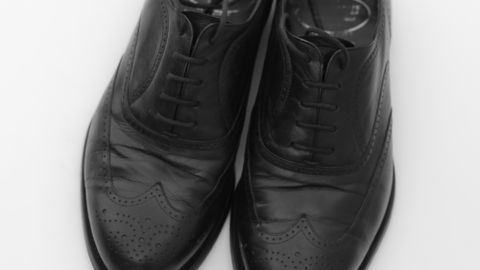
Boots cover the ankle, which makes them warmer, more supportive and more weather-resistant than shoes. Beyond that, the differences are about closure, height, sole and construction — and each combination originated in a specific use.
Chelsea
Elastic gussets at the sides, a loop at the back, no lacing. Developed in the Victorian period, associated with riding, and named after the King's Road in the 1960s.
The absence of lacing produces a very clean line, which makes Chelsea boots the dressiest boot and the one most acceptable with tailoring. A slim last in dark leather works with a suit in most contexts.
The trade-off: the elastic is the failure point and stretches over time, and there is no adjustment, so fit has to be right at purchase. High insteps in particular can find them difficult to get on.
Chukka and desert boot
Ankle height, two or three pairs of eyelets, unlined or lightly lined.
Chukka generally has a leather sole and a more refined last. Desert boot — the Clarks version derived from Cairo bazaars via British officers in the Western Desert — has a crepe rubber sole and is softer and less structured.
Both are casual to smart casual. Suede is the traditional material and reads as more casual than calf.
Crepe soles are comfortable and grip well on dry surfaces, and are poor in wet conditions and pick up debris.
Ankle height with a strap that wraps around and buckles. Originating in riding wear, and one of the dressier boots — the buckle replaces lacing and produces a similarly clean line to a Chelsea while allowing adjustment.
Underused, and a genuine alternative for anyone who finds Chelsea boots difficult to fit.
Derby and service boots
Open lacing over the ankle, typically five to seven eyelets. Sturdy, adjustable, and derived from military and work patterns.
Casual, versatile, and the most practical boot for walking. The open lacing accommodates a high instep and allows the fit to be adjusted for thick socks.
Work boots
Heavier construction, thicker soles, frequently with a toe reinforcement, and often Goodyear welted or stitchdown for repairability.
Distinctly casual, extremely durable, and heavy. Genuine work boots require a substantial break-in period, and the ones that do not are usually not built the same way.
Country and hiking boots
Storm welts, Norwegian welts, commando or lugged rubber soles, and frequently a gusseted tongue for water resistance.
Built for wet ground. The distinguishing features — the outward-stitched welt, the deep lug sole — are what make them look rugged and are functional rather than decorative.
Choosing by purpose
With tailoring: Chelsea or jodhpur, slim last, dark leather, leather or thin rubber sole.
Smart casual, daily: chukka in suede, or a derby boot in a moderate last.
Bad weather in a city: a welted derby boot with a rubber sole, or a storm-welted country boot. Leather soles in persistent wet are a poor choice regardless of quality.
Genuine outdoor use: a proper hiking boot with a lugged sole and, if conditions demand it, a waterproof membrane.
Work: whatever the work requires, and safety standards where applicable.
Fit considerations specific to boots
Try them with the socks you will wear. The difference between thin and thick socks is a full half size, and boots are more often worn with thick socks than shoes are.
Heel lift. Some is normal in a new boot and reduces as the sole flexes. Persistent lift means the heel cup is too large.
Ankle pressure. Check for pressure at the ankle bone and at the top of the shaft. This is where boots differ from shoes and where problems appear after an hour rather than immediately.
Lace to the top. Boots are designed to be laced fully; leaving the top eyelets undone changes the fit and allows the heel to move.
Care
The same as shoes, with two additions.
The shaft needs conditioning too. The area that flexes at the ankle cracks first if it dries out, and it is frequently missed.
Boot trees or newspaper to hold the shaft shape. A boot stored flopped over creases permanently at the ankle.
And, as with all leather footwear, rotation matters more than polish. Two pairs alternated last considerably more than twice as long as one worn daily.
Also by Gil Mowatt
- The four alterations that change everything, and what they should costFit & Tailoring
- How a jacket should fit, starting with the only part you cannot changeFit & Tailoring
- How shoes are built, and why it determines whether they can be repairedShoes & Accessories
- Trouser length: the detail everyone notices and nobody mentionsFit & Tailoring