Fit & Tailoring
Trouser length: the detail everyone notices and nobody mentions
Break is the fold the trouser makes where it meets the shoe. Getting it wrong is the fastest way to look like you have not thought about your clothes, and it is the cheapest thing to fix.
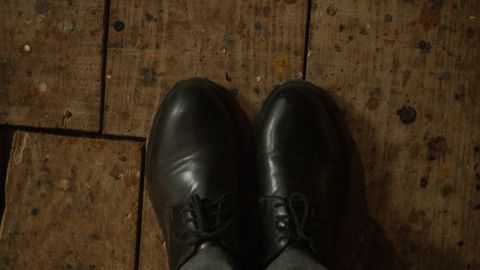
The break is the horizontal fold or crease that forms at the front of a trouser leg where it rests on the shoe. How much break you have is determined by hem length, and it is the most visible single indicator of whether trousers have been finished properly.
The range
No break. The hem ends at or just above the top of the shoe, with the trouser hanging straight and no fold at all. Modern, clean, and unforgiving — it shows any error in length immediately, and it exposes sock at almost any movement.
Slight or quarter break. A small dimple at the front only. The most versatile option and the safest recommendation for most people. Clean without looking severe.
Half break. A single clear horizontal fold. The traditional business standard and still entirely correct.
Full break. Fabric folds and pools noticeably on the shoe. This was standard until the 1990s and now generally reads as either deliberately traditional or simply unaltered.
No break with a gap. The hem ends above the shoe, showing ankle or sock. A deliberate look, and one that is easy to get wrong.
Length is measured at the front of the leg, and the shoe matters. Trousers hemmed for a slim dress shoe will break differently on a chunkier boot. Always have trousers hemmed wearing the shoes you will wear with them — and if you wear both, hem for the one you use most and accept the compromise.
Leg opening is half the equation
Break depends as much on the width of the leg opening as on the length.
A wide leg opening rests on the shoe over a broad area and produces a soft, spread break. A narrow opening sits closer to the ankle and, if hemmed long, will crumple rather than break cleanly — producing a concertina effect that looks like an error even when the length is right.
The practical rule: narrow legs need less break. A slim trouser with a full break looks wrong in a way that a wider trouser at the same length does not.
Typical leg openings run from around 15 cm for a slim trouser to 22 cm or more for a classic cut, measured flat across the hem.
The angled hem
A detail worth knowing about and worth asking for.
Because the front of the leg rests on the shoe and the back falls to the heel, a hem cut at a slight angle — around one to two centimetres longer at the back — produces a cleaner line: minimal break at the front, and full coverage at the back where the hem should reach roughly the top of the heel.
Most alteration tailors will do this if asked and will hem straight if not.
Cuffs
Turn-ups, or cuffs, add weight to the hem, which helps a trouser hang straight and produces a crisper break. They suit pleated and wider-cut trousers, and they generally look wrong on a very slim leg.
A cuff typically runs 3.5 to 5 cm deep, proportional to the wearer's height. They shorten the visual line of the leg slightly, so tall wearers can carry deeper cuffs and shorter wearers are usually better without.
The rise, which explains a lot of bad fit
Rise is the distance from the crotch seam to the top of the waistband, and it determines where the trousers sit on the body.
Low rise sits on the hips. Mid rise sits between hip and natural waist. High rise sits at the natural waist, above the hip bone — where trousers sat for most of the twentieth century.
Rise matters for proportion more than any other trouser measurement. Trousers worn at the natural waist create a longer visible leg and a shorter torso, which is the proportion most people are trying to achieve. Low-rise trousers do the reverse.
It also matters for comfort. A rise too short for your body produces pulling at the crotch and a waistband that sits under the belly rather than at it, which is the single commonest cause of trousers that will not stay up.
Rise cannot practically be altered. It is a buying decision.
The two-minute check
Stand in front of a mirror, wearing the shoes you intend to wear.
Does the hem sit where you want at the front? Does the back reach roughly the top of the heel without dragging on the floor? Does the leg hang straight from the knee without clinging to the calf? Does the waistband sit where it should without a belt cinching it?
The first two are a hem alteration and cost very little. The third is a taper and costs a little more. The fourth is either a waist adjustment or the wrong trousers.
Also by Gil Mowatt
- The four alterations that change everything, and what they should costFit & Tailoring
- How a jacket should fit, starting with the only part you cannot changeFit & Tailoring
- How shoes are built, and why it determines whether they can be repairedShoes & Accessories
- Shoe care that actually extends the life of a pairShoes & Accessories