Shoes & Accessories
Jewellery: metal, proportion and wearing the same things every day
Most jewellery advice is about occasions. The more useful question is what you can wear continuously without thinking about it, which comes down to metal quality and scale.
Jewellery divides into things worn for an occasion and things worn permanently. The second category is the more useful one to get right, because those pieces are seen constantly and have to survive showers, sleep and washing up.
The metals
Sterling silver is 92.5 per cent silver with copper. Tarnishes — the copper reacts with sulphur in air — and polishes back easily. Softer than gold, so it scratches and bends. Inexpensive.
Gold is measured in karats out of 24. 9ct is 37.5 per cent gold, hard and durable, less rich in colour, and can tarnish slightly. 14ct at 58.3 per cent is the practical standard for daily wear — durable and clearly gold. 18ct at 75 per cent is richer in colour and softer. 22ct and 24ct are very soft and impractical for anything worn constantly.
Gold-filled is a substantial layer of gold mechanically bonded to a base metal, typically 5 per cent of total weight. It lasts years and is a genuine middle option.
Gold-plated and vermeil are thin electroplated layers. Vermeil requires a sterling silver base and a specified thickness in some jurisdictions. Both wear through, at the points of most contact first — the underside of a ring, the back of a chain.
Stainless steel and titanium are durable, hypoallergenic and inexpensive. Titanium is very light. Neither can be resized.
Platinum is dense, extremely durable, naturally white so it never needs re-plating, and expensive.
Nickel allergy affects a substantial minority of people and is the commonest cause of contact dermatitis from jewellery. It is present in many white gold alloys, in cheap costume jewellery and in some stainless steels.
If earrings or a watch back cause redness and itching, nickel is the likely cause. Surgical stainless steel, titanium, niobium, platinum and high-karat gold are the reliable alternatives. Note that white gold is frequently rhodium-plated over a nickel-containing alloy — when the plating wears through, the reaction begins.
Proportion
The variable that determines whether a piece looks right, and it is about scale relative to the wearer.
Chain length changes where a necklace sits and therefore what it does. A choker at 35–40 cm sits at the base of the neck. 45 cm sits at the collarbone. 50 cm sits just below. 60 cm and above sits on the chest and can be doubled.
Where a chain sits relative to a neckline matters more than the chain itself — a pendant disappearing behind a collar is a common and avoidable mismatch.
Earring scale relative to face size. Large earrings on a small face compete with it; small studs on a large face disappear.
Ring width relative to finger. A wide band on a slim finger overwhelms it; a very fine band on a broad finger reads as insubstantial.
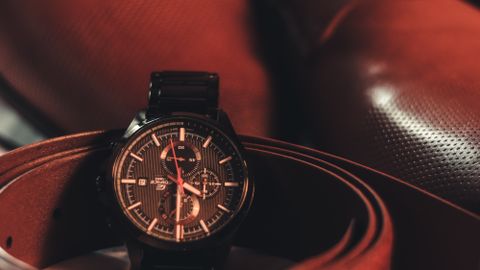
Watch case relative to wrist. Under 16 cm wrist circumference suits 34–38 mm; 16–18 cm suits 38–42 mm; above that, 42 mm and up. The lugs should not overhang the wrist.
Mixing metals
The old rule against it has largely gone, and mixing works when it looks deliberate rather than accidental.
The reliable approach: have enough of each that neither reads as a stray. One silver ring among five gold ones looks like an oversight; three and three does not.
Or use a piece that contains both — a two-tone watch, a mixed-metal chain — which licenses the combination visually.
Building a daily set
The practical approach for anyone who wants to wear the same things without thought.
Choose one metal as the base, and choose it by undertone — gold generally suits warm undertones, silver and white metals cool ones. If you are unsure, hold both against your face in daylight and see which makes your skin look brighter.
Buy solid rather than plated for anything worn constantly. Plating wears through and the piece then needs re-plating or replacing. Solid metal at a lower karat frequently costs less over time than repeatedly re-plating a heavier-looking piece.
Choose pieces that survive water. Gold, platinum, stainless steel and titanium are fine. Sterling silver tarnishes faster with frequent wetting. Pearls, opals, turquoise and porous stones should not be worn in water at all.
Secure fastenings. A spring ring clasp is the cheapest and the most likely to fail; lobster clasps are considerably more secure. For anything valuable, a screw or safety catch.
Care
Put jewellery on last and take it off first. Perfume, hairspray, lotion and cleaning products all damage metals and stones.
Remove for exercise, swimming and cleaning. Chlorine damages gold alloys over time and can cause stress fractures.
Clean gently. Warm water, a drop of mild washing-up liquid, a soft brush. Avoid ultrasonic cleaners on anything with soft or treated stones, or on pieces with glued settings.
Store separately. Harder pieces scratch softer ones, and chains tangle. Individual pouches or a compartmented box.
Silver tarnish can be prevented substantially by storing with anti-tarnish strips in a sealed bag, and removed with a silver polishing cloth. Do not use polish on plated items — it will remove the plating.
Check settings periodically. Push gently on a stone; any movement means the setting needs attention before the stone is lost.
Also by Noor Haddad
- Building a capsule wardrobe by subtraction rather than purchaseCapsule Wardrobe
- Cost per wear: the only shopping arithmetic worth doingShopping Smart
- Why some colours suit you: contrast and undertone, without the seasonsColour & Pattern
- Buying clothes secondhand online without being disappointedShopping Smart