Capsule Wardrobe
Wardrobe basics that are actually basic
Every list of essentials includes a trench coat and a white shirt. Here is the shorter list of things that genuinely work for almost everyone, and the reasoning for each.
Essentials lists are usually a description of one person's wardrobe presented as a universal. The items below earn a place on a different basis: each one combines with a large proportion of what most people already own, works across several levels of formality, and does not date quickly.
That is the whole test. Anything that fails it is a preference rather than a basic.
The short list
1. Well-fitting dark trousers. Navy, charcoal or black, in a wool or wool-blend for versatility. They work with almost every top, they dress up and down, and they are the item people most often own only in an approximate fit.
2. Dark, plain denim. Straight or slim, no distressing, no visible branding. Dark indigo without fading reads as considerably smarter than washed denim and can be worn in contexts where jeans generally are not.
3. A fine merino knit. Crew or v-neck, in navy, grey or camel. Works alone, over a shirt, under a jacket. Probably the single most useful garment on this list because it bridges casual and formal without effort.
4. A plain, well-fitting shirt. White or pale blue, in a two-ply cotton, in a weave heavy enough not to be transparent. The collar is the part that matters.
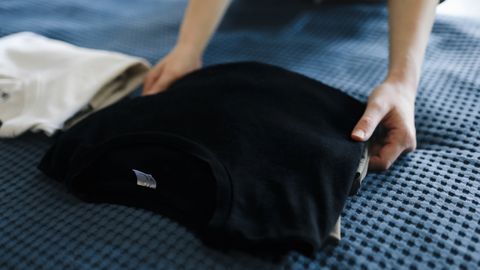
5. A good t-shirt. Heavier than most — 180 GSM or above — so it hangs rather than clings. Plain, in a neutral.
6. A tailored jacket. Navy or grey, unstructured or lightly structured. The single item that raises the formality of anything worn under it. Buy for the shoulders.
7. A wool overcoat. Neutral, knee length or just above, at least 70 per cent wool. Seen more than anything else you own.
8. Clean leather shoes. Dark brown is more versatile than black. Something between a derby and a loafer covers most needs.
9. Minimal leather trainers. White or neutral, low profile, no performance features. The casual counterpart to the shoes.
10. A scarf in wool or cashmere. Warmth, colour next to the face, and the cheapest way to change an outfit.
Combines with at least half your wardrobe.
Works at two or more levels of formality.
Would have looked reasonable ten years ago and will in ten more.
Is worth buying in a better version, because you will wear it constantly.
What is usually on these lists and should not be
A trench coat. Genuinely useful in a wet temperate climate and useless in many others. It is also a specific look rather than a neutral one.
A little black dress. Depends entirely on the wearer's life and body, and black is unflattering on a substantial number of people.
A leather jacket. A strong style statement, not a neutral base.
A blazer with gold buttons. Specific and dated.
A striped Breton top. Charming and a preference.
A white shirt specifically. Pale blue is more flattering on most complexions and shows marks less. White is on this list as one option, not as a requirement.
Where to spend and where not to
Spend on: the coat, the shoes, the jacket. These are structural, they are worn constantly, they are expensive to make well, and the difference between good and cheap is large and visible.
Spend moderately on: knitwear and trousers. Both benefit substantially from quality and both wear out.
Do not overspend on: t-shirts and basics that will be washed constantly and replaced. Above a modest threshold the returns diminish quickly, and the marginal money is better spent on alterations.
Always spend on alterations. A moderately priced garment altered to fit beats an expensive one that does not, every time, and the cost is small.
The order to build in
If starting from very little, the sequence that produces the most wearable outfits fastest:
Trousers and denim first, because they anchor everything. Then the knit and the shirt, which are the layers that do the most work. Then shoes. Then the jacket and the coat, which are the expensive items and the ones worth waiting to buy properly.
The caveat that matters
A basic is only basic if you wear it. Someone who never wears a jacket does not need one on this list, and someone whose life is entirely outdoors needs an entirely different set.
Which is why a wardrobe audit is a better guide than any list — including this one. The items above are the defensible general answer. Your own worn pile is the specific one, and it is better evidence.
Also by Noor Haddad
- Building a capsule wardrobe by subtraction rather than purchaseCapsule Wardrobe
- Cost per wear: the only shopping arithmetic worth doingShopping Smart
- Why some colours suit you: contrast and undertone, without the seasonsColour & Pattern
- Buying clothes secondhand online without being disappointedShopping Smart