Fit & Tailoring
Buying for a body that is changing
Pregnancy, weight change, illness, ageing, transition. Wardrobes assume a fixed body and most bodies are not. The strategies that help are practical rather than emotional.

Almost everyone's body changes over a life, and frequently within a year. Wardrobes are built as though it does not, which produces two related problems: clothes that no longer fit, and a reluctance to buy anything because the body might change again.
The practical responses are the same regardless of the reason for the change.
Prioritise adjustable garments
Some constructions accommodate a range of sizes by design.
Wrap dresses and wrap tops adjust across a meaningful range and define a waist wherever it currently is.
Elasticated and drawstring waists, in a fabric that does not look like sportswear — wool, linen, heavy cotton — give the adjustment without the association.
Side adjusters on trousers, or trousers with a hidden expandable waistband. Both are standard on better tailoring and rarely mentioned.
Belted coats and jackets, which cinch to whatever the waist currently is.
Bias-cut garments, which stretch diagonally and accommodate more than a straight-cut equivalent.
A-line and swing shapes, which fit at the shoulder and are forgiving below.
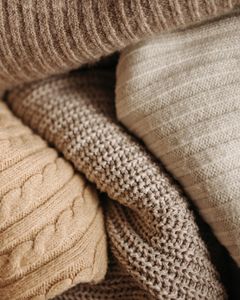
Knitwear generally, which stretches — with the caveat that it also holds a stretched shape.
Whatever else changes, the shoulders change least. A garment that fits at the shoulder can be altered almost anywhere else; one that does not cannot be fixed.
This is why buying tailoring to fit the shoulders and having the body adjusted works across a range of body sizes, and why buying to fit the waist and hoping the shoulders will do produces garments that are permanently wrong.
Use alterations as an ongoing service
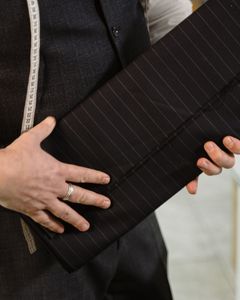
The single most useful shift in thinking: alterations are not a one-off correction at purchase but a way of keeping a wardrobe current as the body changes.
A jacket taken in when weight is lost can be let out again if there is inlay. Trousers can be adjusted at the waist repeatedly. A skirt can be taken in and out several times over its life.
Which makes inlay a purchasing criterion. Check the seam allowances inside anything you intend to keep: generous allowances at the side seams, centre back and hem mean the garment can be adjusted in both directions.
Keep a small working set
During periods of active change, the practical approach is a small number of things that fit now, rather than a large wardrobe of things that mostly do not.
Five or six complete outfits that fit and feel comfortable will serve better than a full wardrobe of near-misses, and the psychological difference is substantial — getting dressed from things that fit is a different experience from getting dressed from things that reproach you.
The rest can be stored out of sight rather than disposed of, if there is a reasonable prospect of returning to it.
Store rather than discard, within limits
The judgement call.
Keeping clothes for a body you may return to is reasonable for a defined period and for garments that are genuinely good and genuinely timeless. It is unhelpful when it becomes a wardrobe of guilt occupying the space where wearable clothes should be.
A practical compromise: box it, label it with a date, store it out of the wardrobe, and review it after a year. What has not been missed and is no longer current goes.
Specific situations
Pregnancy. Dedicated maternity wear is designed for the changing shape and is worth having for the later months. Before that, wrap styles, empire lines, stretch fabrics and simply sizing up in some categories cover a lot. Buying secondhand is particularly sensible here, since maternity clothes have a short life and are widely resold in good condition.
Postpartum. The body does not immediately return, and a small set of comfortable, well-fitting clothes for this period is worth more than trying to get back into a previous wardrobe on a schedule.
Weight change in either direction. Alterations first, replacement second. A well-made garment can frequently absorb one or two sizes of change.
Illness, treatment and recovery. Comfort, ease of dressing, and access if there are medical devices. Front-fastening rather than overhead. Soft fabrics against sensitive skin. This is a genuine design category and there are makers who specialise in it.
Ageing. Body proportions shift gradually, and the commonest error is continuing to buy to a formula set decades earlier. A periodic re-measurement and a fresh look at what actually fits is worth doing every few years.
Transition. Fit priorities frequently change, and the shoulders-first principle applies with particular force. Alterations and made-to-measure become more relevant sooner, and a tailor who is straightforward to work with is worth finding.
The general point
A wardrobe that assumes a fixed body will fail, because bodies are not fixed. Building around adjustable construction, generous inlay and a working relationship with a tailor produces a wardrobe that survives change — and removes the question of whether it is worth buying anything at all.
Also by Noor Haddad
- Building a capsule wardrobe by subtraction rather than purchaseCapsule Wardrobe
- Cost per wear: the only shopping arithmetic worth doingShopping Smart
- Why some colours suit you: contrast and undertone, without the seasonsColour & Pattern
- Buying clothes secondhand online without being disappointedShopping Smart