Fit & Tailoring
Clothing that has to work: uniforms, dress codes and practical constraints
Not everyone chooses what they wear. Where a uniform, a safety requirement or a strict dress code applies, the remaining variables are fit, condition and the small number of permitted choices.
A substantial proportion of people wear what they are told to wear. Style advice largely ignores them, which is unhelpful, because the variables that remain are the ones that matter most anyway.
Fit is almost always available
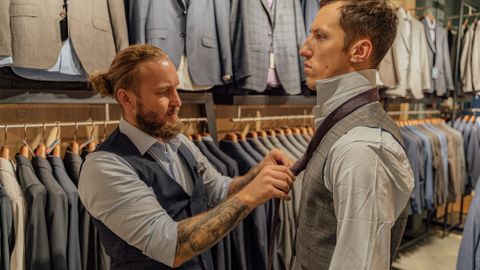
Issued uniforms are supplied in standard sizes and are frequently alterable, and most people never do it.
Check first whether the employer permits alteration — most do, some prohibit it for garments that must be returned, and some will arrange it. Where permitted, the standard alterations apply: trouser hem and taper, sleeve length, taking in a shirt or jacket at the sides.
The difference between an issued uniform worn as supplied and the same uniform hemmed and taken in is substantial, and the cost is small.
Where alteration is prohibited, requesting a different size is frequently possible and rarely done. Many organisations hold a range and will exchange.
Condition does the rest
Where the garment is fixed, condition becomes the main variable and it is entirely within your control.
Pressing. A pressed uniform reads completely differently from an unpressed one, and this is the largest single improvement available.
Replacing worn items promptly. Faded, pilled or frayed garments are usually replaceable on request, and people frequently continue wearing worn items rather than asking.
Shoes. Often the one element with latitude, and the one most visibly neglected. Clean, polished, with heel tips intact.
Laundering correctly. Uniform fabrics are frequently polyester blends, which pill and go shiny with heat. Washing cooler and avoiding tumble drying extends their appearance considerably.
Most uniform policies leave some latitude, and it is worth identifying exactly where.
Commonly: shoes, outerwear worn to and from work, bag, watch, glasses, hairstyle, and — where a colour is specified rather than a garment — the cut and fabric of the item itself. A specified "navy trousers" allows a considerable range.
Safety requirements
Where clothing is specified for protection, the specification is not negotiable and is worth understanding rather than resenting.
High-visibility clothing is rated to standards specifying the area of fluorescent and retroreflective material. Garments must be clean to function — dirt substantially reduces retroreflectivity — and they have a service life after which they no longer meet the standard.
Flame-resistant clothing loses its properties if washed with fabric softener or bleach, or if worn over synthetic base layers that will melt. The base layer question is important and frequently missed: natural fibres or FR-rated synthetics underneath, never ordinary polyester.
Safety footwear is rated for specific hazards. Fit matters more here than in ordinary shoes, because ill-fitting safety boots are worn for long shifts and cause genuine harm.
Loose clothing near machinery is a hazard rather than a style choice, and the same applies to jewellery, lanyards and long hair.
Strict dress codes without a uniform
Common in law, finance, some public-facing roles and some religious contexts.
Where a code specifies formality without specifying garments, the available variables are considerable: cut, fabric, texture, subtle pattern, fit, and accessories within whatever limits apply.
A conservative dress code executed with good fit, quality fabric and attention to texture reads entirely differently from the same code executed with an ill-fitting suit — and neither breaks any rule.
Physical work
Where the constraint is the work rather than a policy.
Durability at the wear points. Reinforced knees, double-stitched seams, heavier fabric at stress areas.
Movement. Gussets, articulated knees, action backs. These are real design features and they make a substantial difference over an eight-hour shift.
Layering, because physical work generates heat and stopping produces rapid cooling. The base layer matters most, and cotton against the skin is the wrong choice — it holds sweat and chills you the moment you stop.
Fit that does not catch. Loose enough to move, close enough not to snag.
The general point
The variables that determine whether clothing looks good — fit, condition, appropriateness — are almost entirely available even when the garments are not chosen.
Which means the person in a fixed uniform who has it altered, presses it, and maintains their shoes will look considerably better than the person with full freedom who does none of those things. That has always been true, and it is the part of the subject that generalises.
Also by Gil Mowatt
- The four alterations that change everything, and what they should costFit & Tailoring
- How a jacket should fit, starting with the only part you cannot changeFit & Tailoring
- How shoes are built, and why it determines whether they can be repairedShoes & Accessories
- Trouser length: the detail everyone notices and nobody mentionsFit & Tailoring