Capsule Wardrobe
Work And Weekend From The Same Twelve Garments
A single wardrobe serving both office and free time depends on choosing garments that are neutral in formality rather than owning two separate sets.

Most wardrobes are secretly two wardrobes, one for work and one for everything else. Merging them halves the volume, but only if the overlap is chosen deliberately.
The overlap is narrower than it looks
Very formal garments cannot come to the weekend, and very casual ones cannot go to work. The usable middle is a smaller band than most people assume.
That middle is where a merged wardrobe lives. A garment that reads as slightly dressy in casual company and slightly relaxed at work is doing both jobs at once.
Anything that only works in one setting is not part of the merged core. It can still be owned, but it sits outside the twelve and is counted separately.
Trousers do most of the work
Trousers set the formality of an outfit more decisively than tops do. A pair that is smart in cut but plain in fabric will travel between both settings.
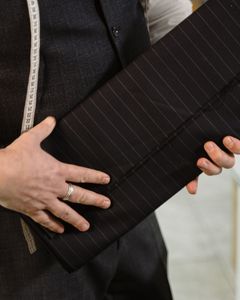
Flat-fronted trousers in a mid-weight wool or a firm cotton read as appropriate almost anywhere. They accept a shirt and a jumper equally without looking like a compromise.
Denim rarely crosses in the other direction. It can be dressed upward only so far, which is why it belongs to the weekend half rather than the core.
Layers change the register
The same shirt reads differently under a jacket than it does alone with sleeves rolled. The garment has not changed; the layer on top has moved the whole outfit.
This is what makes a small merged wardrobe workable. One or two outer layers effectively double the set by shifting where each combination sits on the formality scale.
An unstructured jacket does this better than a structured one, because it can be removed without the outfit underneath looking incomplete. Structure commits you to wearing the jacket.
Shoes are the hardest crossover
Footwear resists the merge more than clothing does. A shoe that suits an office often looks stiff at the weekend, and trainers rarely go the other way.
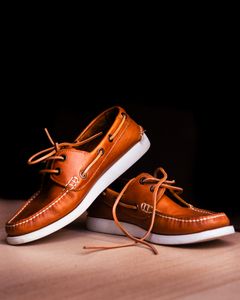
The solution is usually a plain leather shoe with a chunkier sole, or a clean leather trainer. Both sit far enough from either extreme to be unremarkable in both.
Accepting two pairs rather than one is often the honest answer. Shoes are the place where a merged wardrobe legitimately needs a duplicate, and forcing one pair produces neither.
Colour keeps the set coherent
Twelve garments only feel like a wardrobe if they combine freely. That requires restricting the palette far more tightly than a larger wardrobe would ever need to.
Two neutrals, one darker and one lighter, plus a single accent, is enough. Every addition beyond that reduces the number of working combinations rather than increasing them.
The discipline feels severe when buying and invisible when dressing. That asymmetry is the whole argument for a merged wardrobe over two comfortable, separate, half-used ones.
Also by Noor Haddad
- Building a capsule wardrobe by subtraction rather than purchaseCapsule Wardrobe
- Cost per wear: the only shopping arithmetic worth doingShopping Smart
- Why some colours suit you: contrast and undertone, without the seasonsColour & Pattern
- Buying clothes secondhand online without being disappointedShopping Smart