Fit & Tailoring
Why The Same Size Fits Differently By Fabric
Identical patterns in different cloth produce different fits, because drape, stretch and thickness change how a garment sits and how much room it needs.
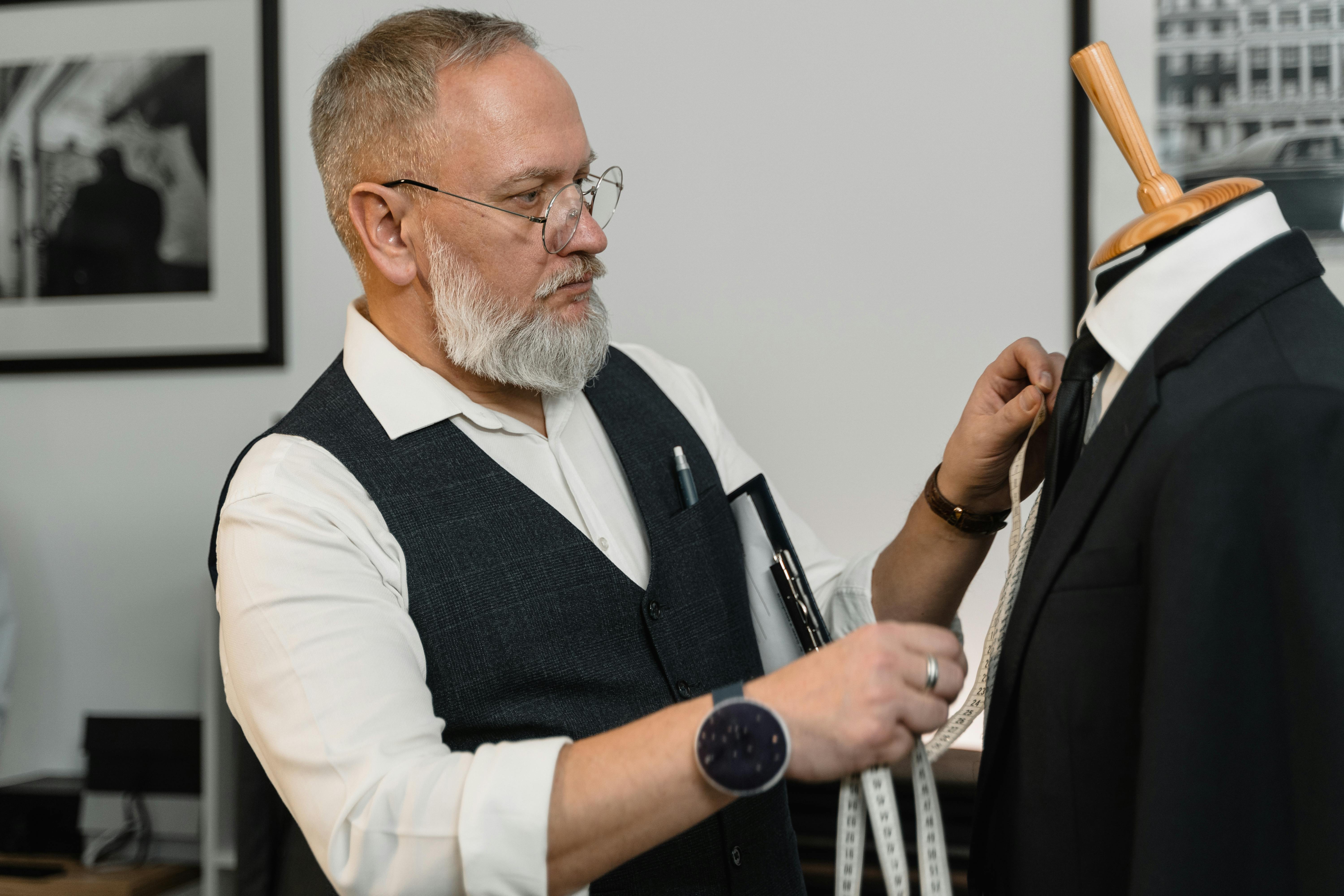
Two garments cut from the same pattern in the same size can fit noticeably differently. The variable is the cloth, and its behaviour changes what the measurements mean.
Drape decides where fabric sits
A heavy, fluid cloth falls close to the body under its own weight. A light, crisp one stands away from it, holding the shape the pattern gave it.
This means the same waist measurement reads as fitted in one fabric and loose in another. Neither garment is mis-sized; they are doing different things with the same room.
It also explains why fabric substitution is a design decision rather than a material one. Changing the cloth changes the silhouette without any pattern change at all.
Thickness consumes room
A thick fabric takes up interior space and needs more ease to allow the same movement. Heavy outerwear cut to the measurements of a shirt would be genuinely restrictive.
The effect compounds at seams and layers, where several thicknesses meet. This is why heavy garments feel tight at the armhole first.
Patterns are graded for their intended cloth weight, so a garment made up in something heavier than intended will fit smaller than its label suggests.
Stretch changes the whole relationship
A woven fabric with no elastane holds its dimensions and the fit is what the pattern specifies. Add stretch and the garment adapts to the body instead.
Stretch garments are therefore usually cut smaller than the body measurement, relying on extension for fit. Ordering to a body chart in a stretch fabric gives something too large.
Recovery matters as much as stretch. Fabric that extends but does not return produces a garment that fits in the morning and bags by evening.
Grain direction affects how a garment moves
Fabric behaves differently along the warp, along the weft and diagonally across the bias. A bias-cut garment stretches and drapes in a way the same cloth cut straight does not.
This is why some garments cling and flow while others of the same material hold a shape. The cut relative to the weave is doing it, not the fibre.
Bias-cut items also change dimension with wear and hanging, which is why they are often sized and cared for differently from the same cloth cut conventionally.
Fabric changes over the garment's life
Cloth relaxes with wear and body heat, so most garments fit slightly larger after a few hours and after a few months. Wool does this markedly; linen and cotton do it less.
Washing works the other way, tightening the weave and shrinking the fabric back. The two effects alternate, which is why some garments seem to change size repeatedly.
Buying to the fit after a few wears rather than the fit in the shop accounts for this. For wool in particular, a fit that feels perfect immediately will soon be loose.
Also by Noor Haddad
- Building a capsule wardrobe by subtraction rather than purchaseCapsule Wardrobe
- Cost per wear: the only shopping arithmetic worth doingShopping Smart
- Why some colours suit you: contrast and undertone, without the seasonsColour & Pattern
- Buying clothes secondhand online without being disappointedShopping Smart