Shoes & Accessories
Why Shoes Need A Day Off
Leather shoes worn on consecutive days retain moisture that degrades the material from inside, which is why rotation extends life more than any polishing routine.
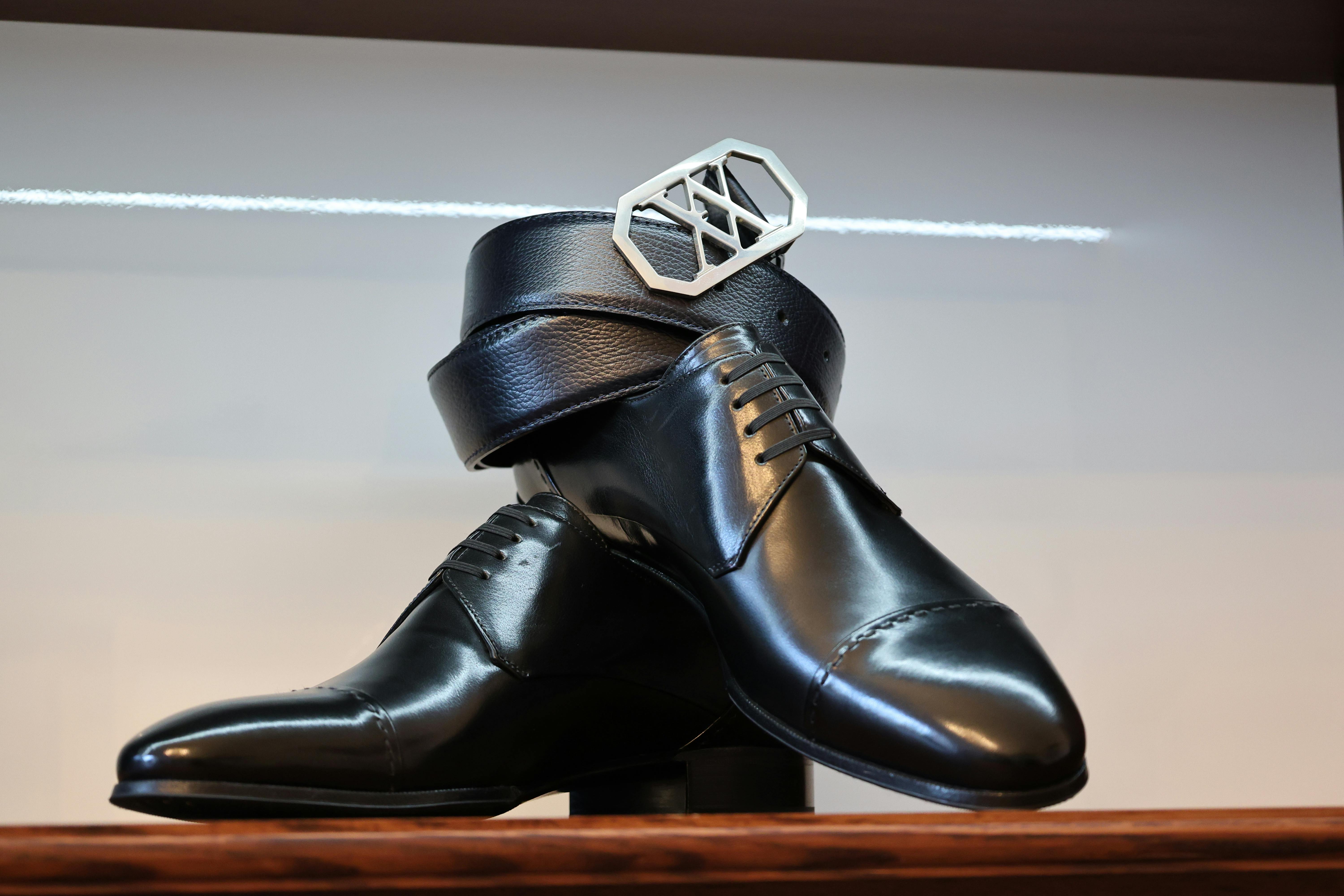
Rotating shoes is standard advice and the reason given is usually vague. The mechanism is moisture, and understanding it explains why rotation outperforms almost every other care habit.
A day of wear puts moisture into the leather
Feet release a substantial amount of moisture over a day. Most of it is absorbed by the lining and the insole, and a share passes into the upper leather itself.
Leather is a porous protein structure that takes water in readily. Saturated leather is weaker, stretches more easily and holds creases in whatever position it dries in.
Worn again the next morning, the shoe starts damp and finishes wetter. Over weeks the material never returns to a dry state and never recovers its original firmness.
Drying takes longer than a night
A leather shoe needs roughly a day at room temperature to release absorbed moisture through the material. A night in a hallway is not enough for the interior layers.
Forcing it with direct heat causes a worse problem. Rapid drying drives out the natural oils along with the water, leaving leather stiff, cracked and unable to flex.
Airflow, room temperature and time are the whole method. A shoe left where air can move around it, unlaced and opened out, dries at the rate the material tolerates.
Persistent damp degrades the structure
Constant moisture breaks down the leather fibres and the adhesives holding the shoe together. Linings rot from the inside, and stitching in the welt weakens where it stays wet.
It also supports bacterial and fungal growth, which is the actual source of shoe odour. Dry shoes rarely smell, regardless of how often they are worn.
Because the damage is internal it is invisible until the shoe fails. Two pairs worn alternately routinely last more than twice as long as one worn daily.
Shoe trees address shape, not just moisture
Unsupported leather dries into the flexed shape it held when removed, which sets the creases across the vamp permanently and deepens them with every cycle.
A tree holds the upper extended so the leather dries flat. Unfinished wood also absorbs some moisture from the interior, though this is secondary to the shaping effect.
Inserting them immediately matters. A shoe left overnight has already begun setting, and a tree inserted the next day cannot undo the shape it has taken.
The same logic applies beyond leather
Fabric trainers hold considerably more moisture than leather does and dry more slowly because the midsole foam is closed. Consecutive wear compresses that foam while it is damp.
Foam cushioning also needs time to recover its structure after compression. A day of rest restores a measurable amount of the cushioning a hard day of walking removed.
Rotation is therefore not a leather-specific ritual. It is a general consequence of shoes absorbing water and being compressed, which applies to every construction there is.
Also by Noor Haddad
- Building a capsule wardrobe by subtraction rather than purchaseCapsule Wardrobe
- Cost per wear: the only shopping arithmetic worth doingShopping Smart
- Why some colours suit you: contrast and undertone, without the seasonsColour & Pattern
- Buying clothes secondhand online without being disappointedShopping Smart