Colour & Pattern
Why Seasonal Colours All Arrive At Once
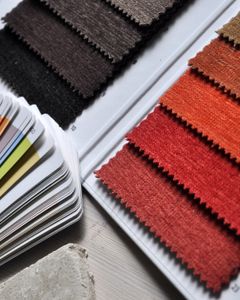
The colours available in shops each season are decided years earlier by dye and yarn production schedules, which is why unrelated brands offer the same palette.

Walking into several unrelated shops and finding the same colours is not coincidence or copying. It is the consequence of a supply chain that commits to colour long before design.
Colour is decided upstream of the garment
Yarn and fabric mills must decide what to produce well ahead of any brand's collection, because dyeing and weaving have long lead times and minimum quantities.
Brands then select from what mills are offering. The available palette is therefore largely fixed before a single garment is designed.
This is why the range of colours in a season is narrower than the range of designs. The designs vary widely; the colour options behind them do not.
Forecasting coordinates the industry
Colour forecasting services publish palettes several years ahead, and mills, brands and manufacturers all reference them. The forecast becomes self-fulfilling through that shared use.
It is less a prediction than a coordination mechanism. Its value lies in everyone working from the same reference, which reduces risk across the whole supply chain.
The result is convergence. Brands with no relationship arrive at similar palettes because they consulted the same source and bought from overlapping mills.
Dyeing economics push toward volume
Dyeing is done in batches with substantial minimum quantities, and small runs of unusual colours are disproportionately expensive.
Mills therefore concentrate on colours they expect to sell in volume, which reinforces the narrow palette rather than broadening it.
Brands wanting a specific shade outside that range must commission it, which requires scale. This is one of the practical advantages large brands hold over small ones.
Some colours are effectively permanent
Navy, black, grey, white and a small set of neutrals are produced continuously because demand never falls. They sit outside the seasonal cycle entirely.
This is why a wardrobe built on neutrals can be replaced and extended indefinitely, while one built on a season's colour cannot be matched two years later.
It also explains why the same neutral from different brands is usually close. They are buying similar standard shades from similar suppliers.
What this means for buying
A colour that is everywhere this year will be difficult to find next year and difficult to match the year after. That is a supply fact rather than a fashion judgement.
Buying complete outfits in a seasonal colour is therefore riskier than buying single pieces, because the coordinating items cannot be replaced.
Treating seasonal colour as accent and permanent colour as structure follows directly. The structure remains buyable; the accent has a window and then closes.
Also by Noor Haddad
- Building a capsule wardrobe by subtraction rather than purchaseCapsule Wardrobe
- Cost per wear: the only shopping arithmetic worth doingShopping Smart
- Why some colours suit you: contrast and undertone, without the seasonsColour & Pattern
- Buying clothes secondhand online without being disappointedShopping Smart