Colour & Pattern
The Patterns That Hide Stains And The Ones That Show
Busy small-scale patterns conceal marks while flat mid-tone solids display them, and the mechanism is contrast rather than color darkness.

Some garments survive a meal out and others record it permanently. The variable is not how dark the fabric is but how much visual noise it already contains.
The eye detects edges, not marks
Vision is strongly tuned to detect boundaries where brightness changes, which is how a stain becomes visible as a discrete shape.
On a plain surface a mark is the only edge present, so attention lands on it immediately.
On a surface already full of edges, an additional one competes with everything else and stops registering as a separate object.
Scale matters more than busyness
A small-scale pattern with many boundaries per unit area conceals better than a large-scale one with the same number of colors.
Large motifs leave broad areas of flat color between them, and a mark landing in one of those areas is as visible as it would be on a solid.
This is why fine prints, small checks and heathered fabrics are the practical choices for anything worn in circumstances where spills happen.
Mid-tones are the worst case
Very dark fabrics conceal dark marks, and very light ones conceal light ones such as dust and dried salt.
Mid-tone solids provide contrast against both, so they show grease, water spotting and dust equally well.
Mid-tone gray and pale blue are the classic offenders, since they also darken visibly when wet, which makes sweat conspicuous in a way black and white are not.
Texture works like a pattern
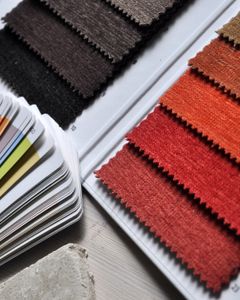
A fabric with a visible weave, a raised nap or a slub yarn creates its own surface variation and hides marks the way a print does.
Flat, smooth, tightly woven surfaces do the opposite, presenting an even field where any interruption is apparent.
This is part of why a textured tweed remains presentable through hard use while a smooth gabardine of the same color does not.
The trade against formality
The fabrics that hide marks best are generally the least formal, since visual noise reads as casual and smoothness reads as dressy.
A formal setting therefore requires exactly the surfaces that record everything, which is why care and immediate treatment matter most on precisely those garments.
Where the choice is open, matching pattern scale and texture to how the garment will actually be used does more for its appearance over time than any cleaning routine.
Also by Noor Haddad
- Building a capsule wardrobe by subtraction rather than purchaseCapsule Wardrobe
- Cost per wear: the only shopping arithmetic worth doingShopping Smart
- Why some colours suit you: contrast and undertone, without the seasonsColour & Pattern
- Buying clothes secondhand online without being disappointedShopping Smart