Fabric & Care
Sun Damage: The Fading That Happens Indoors
Light breaks down dye and fiber whether or not a garment is worn outside, and the position of a closet or a drying rack can age clothing quietly for years.
Fading is assumed to come from washing and from wear. A significant part of it comes from light, including light that arrives through a window onto clothes that are simply hanging.
Ultraviolet light breaks chemical bonds
Dye molecules absorb light, and higher-energy ultraviolet wavelengths carry enough energy to break the bonds that hold those molecules together.
A broken dye molecule no longer absorbs the same wavelengths, so it no longer produces the same color. The fabric lightens permanently.
The same energy attacks the fiber itself, which is why heavily sun-exposed fabric becomes brittle and tears easily well before it looks worn.
Fibers differ in how well they resist it
Silk and nylon degrade quickly under ultraviolet exposure, losing strength as well as color at a rate that surprises people.
Cotton and polyester hold up considerably better, and acrylic is among the most resistant, which is why it appears in outdoor furnishings.
Dye chemistry matters as much as fiber. Some colors are inherently less lightfast, and the fading of a multicolored print is often uneven for that reason.
Window glass filters some but not all of it
Ordinary glass blocks the shortest ultraviolet wavelengths and lets longer ones through, so indoor light is less damaging than direct sun but not harmless.
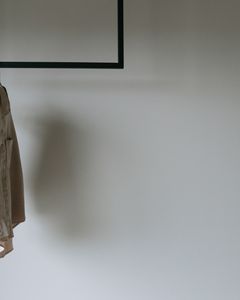
A garment hanging in a sunlit spot for months accumulates a meaningful dose, and the damage shows as a lighter band where the light fell.
The classic result is a shoulder line on a shirt hung near a window, or a stripe across a stack of folded clothing on an open shelf.
Drying outdoors is a deliberate trade
Line drying in sun is efficient and avoids dryer heat, but it delivers a concentrated ultraviolet dose to a wet garment, which is when many dyes are most vulnerable.
Drying colored items inside out reduces the exposure to the visible surface, and drying in shade removes most of the effect while keeping the benefit.
The exception is white cotton, where sunlight has a mild bleaching action that many people use intentionally on linens.
Storage decisions follow from this
Closets are dark, which is one of their underappreciated functions. Clothing stored on open racks in a bright room ages faster than the same clothing in a closet.
Garment bags block light as well as dust, and opaque ones do it better than clear plastic, which is otherwise the more common choice.
For anything expensive and rarely worn, this is the difference between a garment that comes out of storage looking as it went in and one that has quietly lost a shade.
Also by Noor Haddad
- Building a capsule wardrobe by subtraction rather than purchaseCapsule Wardrobe
- Cost per wear: the only shopping arithmetic worth doingShopping Smart
- Why some colours suit you: contrast and undertone, without the seasonsColour & Pattern
- Buying clothes secondhand online without being disappointedShopping Smart