Fit & Tailoring
Sleeve Length, Cuffs And The Half Inch That Shows
Sleeve length is judged against the wrist bone and against the shirt beneath, and small errors are unusually visible because the hand provides a fixed reference.
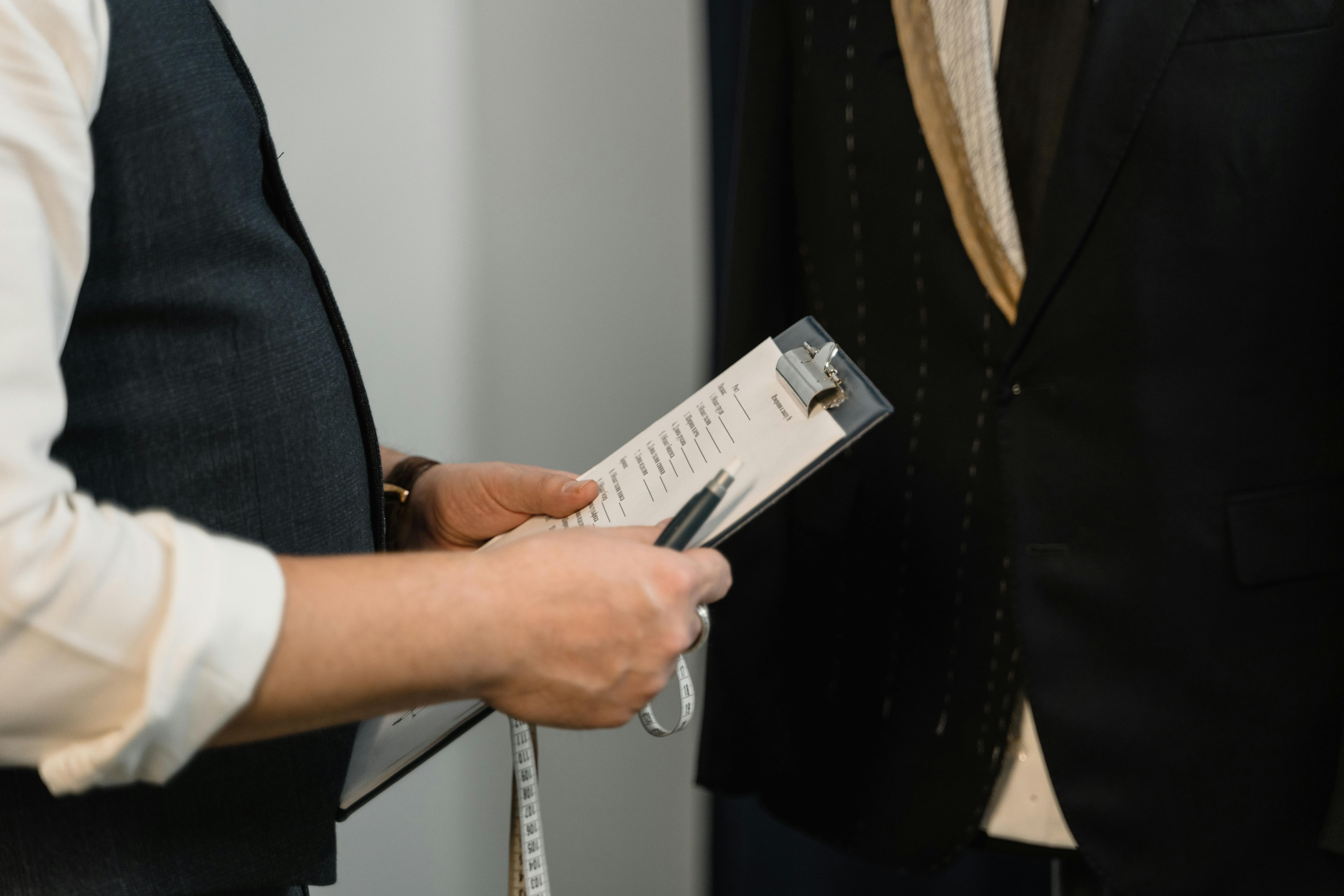
Sleeve length is one of the few fit details that people notice without being able to name. The eye uses the hand as a reference point, which makes small errors obvious.
The wrist bone is the reference
A shirt sleeve should end at the base of the thumb, so that raising the arm does not pull the cuff up the forearm. The wrist bone is the landmark for checking it.
A jacket sleeve ends higher, roughly at the wrist bone itself, leaving the shirt cuff visible beneath. The relationship between the two is what the eye is reading.
Because the hand does not change size, this is one of the few fit measurements that is genuinely close to absolute rather than relative to build.
A visible shirt cuff is structural, not decorative
Showing a small amount of shirt cuff below a jacket sleeve does a practical job: it protects the jacket sleeve from wrist contact and keeps it clean.
It also creates a break between the jacket and the hand, which is why an absent cuff makes the arm look like it continues indefinitely into the sleeve.
The amount is small, and more is not better. A wide expanse of shirt cuff indicates the jacket sleeve is short rather than the shirt being correct.
Posture changes the apparent length
Arms hang differently depending on shoulder position and posture, and someone with a forward shoulder carriage will find sleeves reading shorter at the front.
Fittings should therefore be done standing naturally rather than deliberately straight. A sleeve set to a posture the wearer does not hold will be wrong in use.
Arm length also frequently differs between the two sides. Where the difference is noticeable, sleeves can be finished at different lengths, which is routine work.
Cuff construction limits what can be altered
Shirt sleeves are shortened from the cuff end, which means removing and reattaching the cuff and adjusting the placket. It is straightforward but not trivial.
Jacket sleeves with functional buttonholes cannot be shortened from the bottom without destroying them. That work has to be done at the shoulder instead, which is expensive.
Non-functional buttons can simply be moved. This is one case where the cheaper garment is genuinely easier to alter than the expensive one.
Sleeve width is the other half of the fit
A sleeve of correct length but excessive width still looks wrong, because the extra fabric folds at the wrist and disguises where the sleeve ends.
The cuff should be close enough that the sleeve does not slide over the hand when the arm hangs, but loose enough to admit a watch without pressure.
Adjusting width is simple on a shirt and moderately involved on a lined jacket sleeve. In both cases it changes the impression more than length alone does.
Also by Noor Haddad
- Building a capsule wardrobe by subtraction rather than purchaseCapsule Wardrobe
- Cost per wear: the only shopping arithmetic worth doingShopping Smart
- Why some colours suit you: contrast and undertone, without the seasonsColour & Pattern
- Buying clothes secondhand online without being disappointedShopping Smart