Shopping Smart
Reading a garment: the two-minute quality inspection
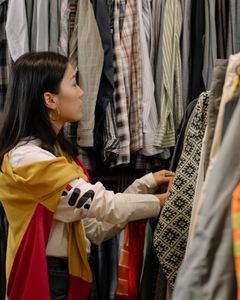
Everything worth knowing about how a garment was made is visible in the shop, and the whole inspection takes about as long as reading the price tag properly.

Price is a poor predictor of construction quality. Brand is worse. What does predict it is a short list of details that are visible on the rail, and once the sequence is habitual it takes two minutes.
1. Turn it inside out
The inside of a garment is where corners are cut, because customers do not look.
Seam finishing. Are raw edges enclosed, overlocked, bound or French-seamed — or are they raw and already fraying? Unfinished seams fray progressively and eventually fail.
Seam allowance. How much spare fabric is there beyond the stitching? A generous allowance — 1.5 cm or more — allows future alteration. A narrow one, 6 mm or less, means the garment can never be let out.
Loose threads. A few are normal. Many indicate rushed finishing, and where they appear at seam ends rather than randomly, the seams may not be secured.
2. Count the stitches
The fastest single quality indicator available.
Look at a straight main seam and count stitches over a centimetre. Around 5–6 is cheap construction. 8–10 or more indicates a slower, more careful sew, and produces a stronger seam that puckers less.
Check that the stitching is straight and that the tension is even — a seam that puckers along its length has tension problems and will not lie flat however it is pressed.
3. Check the pattern matching
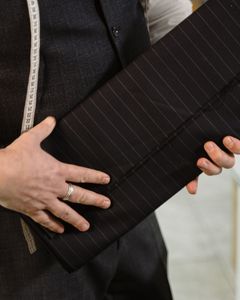
On anything striped, checked or with a directional print, this is the most reliable indicator that a manufacturer is not economising.
Matching wastes fabric — the pieces must be cut with the pattern aligned rather than nested tightly — and takes time.
Check at the centre front, where a placket meets the body; at the side seams; where the sleeve joins the body; at the shoulder yoke; and at any pocket, where a well-made garment aligns the pocket so the pattern appears continuous.
Gently pull a seam apart across its length. You should not see the stitching, and you should not see gaps of fabric between stitches.
Also check the grain: hold the garment up and see whether the side seams hang straight and vertical. A twisted side seam means the pieces were cut off-grain, which cannot be fixed and gets worse with washing.
5. Buttons and fastenings
Material. Mother-of-pearl, horn and corozo are heavier, cooler to the touch and show natural variation. Plastic is uniform and lightweight.
Attachment. Are buttons sewn with a thread shank — a small stem lifting the button off the fabric — or flat? A shank allows the button to sit properly over the buttonhole layer.
Buttonholes. Are they neatly and densely stitched, or sparse with visible gaps? Hand-worked buttonholes are a mark of high-end tailoring and have a distinctive raised, slightly irregular appearance.
Spare buttons supplied indicates a manufacturer expecting the garment to be repaired.
Zips. Branded — YKK, Riri, Lampo — and running smoothly. Check that the zip tape is stitched neatly and lies flat.
6. The fabric itself
Composition on the label. Natural fibres and higher percentages of them generally last longer for the same garment type.
Weight. Pick it up. Heavier fabric of the same fibre generally drapes better and lasts longer.
Opacity. Hold to the light.
Recovery. Scrunch a section in your fist for five seconds and release. How fast it recovers predicts how it will look after an hour sitting down.
Pilling test. Rub the surface briskly between your palms for fifteen seconds. Immediate balling means immediate pilling.
7. Structure, where it applies
Jackets: pinch the front between the buttonholes and the lining and roll the layers between your fingers. A separate floating canvas layer indicates canvassed construction; a single bonded sheet indicates fusing.
Shirts: feel the collar for distinct layers versus one stiff board.
Knitwear: look at the armhole seam from inside for fully fashioned linking versus overlocked cut edges.
Trousers: check for a lined seat, a proper waistband construction, and inlay at the centre back seam.
8. Try it on and move
The final check and the one most often skipped.
Raise your arms. Reach forward. Sit down. Cross your legs. Stand up and look at what happened.
A garment that only works standing still in a mirror is a garment that will hang in a wardrobe.
What none of this tells you
Nothing here indicates how a garment was made in terms of labour conditions or environmental impact, which are not visible in construction and are not correlated with it — expensive garments are frequently made in the same facilities as cheap ones.
What the inspection does tell you is whether the thing will survive being worn, which is the question the price tag is silent on.