Shopping Smart
Why fast fashion is cheap, in construction terms
The cost reductions are visible in the garment if you know where to look. They are not primarily about fabric quality, and understanding what was cut explains how long the thing will last.

A very cheap garment is cheap for a series of specific, identifiable reasons. Most of them are decisions about construction and material specification rather than about labour alone, and most are visible on the rail.
Where the money is saved
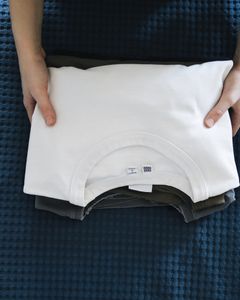
1. Fabric weight. The largest single lever. Fabric is sold by weight, so reducing GSM reduces cost proportionally. A 130 GSM t-shirt costs meaningfully less to make than a 190 GSM one and is thinner, more transparent, clings rather than hangs, and wears through faster.
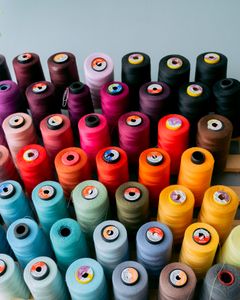
2. Fibre and yarn. Short-staple cotton rather than long-staple. Single-ply rather than two-ply. Higher synthetic content. Recycled or lower-grade fibres in blends.
3. Stitch density. Fewer stitches per centimetre means faster sewing and less thread. It also means weaker seams and more puckering. This is one of the clearest visible markers.
4. Seam finishing. Raw overlocked edges instead of enclosed seams. Faster and prone to fraying.
5. Seam allowance. Narrower allowances use less fabric across a production run. They also make the garment unalterable, and they leave less material at stress points.
6. Pattern matching. Not matching stripes and checks allows the pattern pieces to be nested tightly, using significantly less fabric. This is why cheap patterned garments almost never match at the seams.
7. Interlinings. Fused rather than sewn-in collars and jacket fronts. Fast, and prone to bubbling as the adhesive degrades.
8. Fastenings. Unbranded zips, thin plastic buttons, buttons sewn flat without a shank, no spare buttons.
9. Grain. Cutting pieces off-grain to fit more onto the fabric. Produces garments whose side seams twist, and it gets worse with each wash. This is the most consequential and least visible of the savings.
10. Sizing and pattern development. Fewer fittings, less pattern refinement, more aggressive grading. This is why cheap garments frequently fit poorly in ways that have nothing to do with your body.
Count stitches over a centimetre. Check whether stripes match at the side seam. Hold the garment up and see whether the side seams hang straight. Turn it inside out and look at the seam allowance width.
Four checks, under two minutes, and they tell you most of what the price is concealing.
What cheap does not always mean
Worth being fair, because the picture is not uniform.
Some inexpensive garments are well made. Basic construction on a simple garment — a plain t-shirt, a straightforward knit — leaves fewer places to economise, and a cheap version can be genuinely adequate.
Conversely, expensive is not a guarantee. A great deal of premium-priced clothing is fused, low stitch-density and unmatched, priced on brand rather than construction. Some luxury goods are made in the same facilities as budget ones.
Which is exactly why the inspection matters more than the price tag.
The volume model
The economics that make the construction decisions rational.
Fast fashion operates on rapid design cycles, very large volumes, and low margins per unit. Garments are designed for a short commercial life — worn a handful of times, then replaced. Construction is specified to match: durable enough to survive the intended life and no more.
From the manufacturer's perspective this is not a failure. It is the specification. The mismatch arises when a customer expects the garment to last, and the garment was never designed to.
The consequences worth knowing
Volume. Clothing production has roughly doubled since 2000 while the average number of times a garment is worn has fallen substantially. The textile industry accounts for a significant share of global emissions and wastewater.
Synthetic shedding. Polyester and other synthetics release microfibres during washing, which pass through treatment plants into waterways. Lower-quality synthetics with shorter fibres shed more.
Labour. Downward price pressure passes through the supply chain, and the consequences at the bottom of it have been documented extensively. Certifications such as Fair Wear Foundation address this, and coverage is patchy.
What to do practically
Buy fewer, better-constructed garments where you can afford to, prioritising the items you wear most.
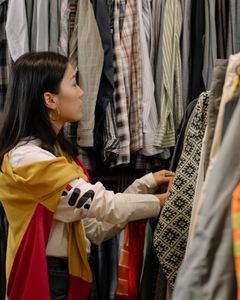
Buy secondhand, where the marginal impact is near zero and where older garments are frequently better made.
Inspect before buying at any price. The two-minute check applies equally to a £15 shirt and a £150 one, and it is more likely to surprise you at the higher price.
Where you do buy cheap, buy the simple things. Basic constructions have less scope for hidden economising, so a cheap plain t-shirt is a better bet than a cheap tailored jacket.
Care for what you own. Washing cooler and less often, line drying and repairing extends garment life more than any purchasing decision, and it costs nothing.