Fabric & Care
Drying Clothes: Heat, Air And What Shrinks
Most shrinkage happens in the dryer rather than the wash, because heat plus tumbling relaxes fibre tension and felts wool in a way water alone does not.
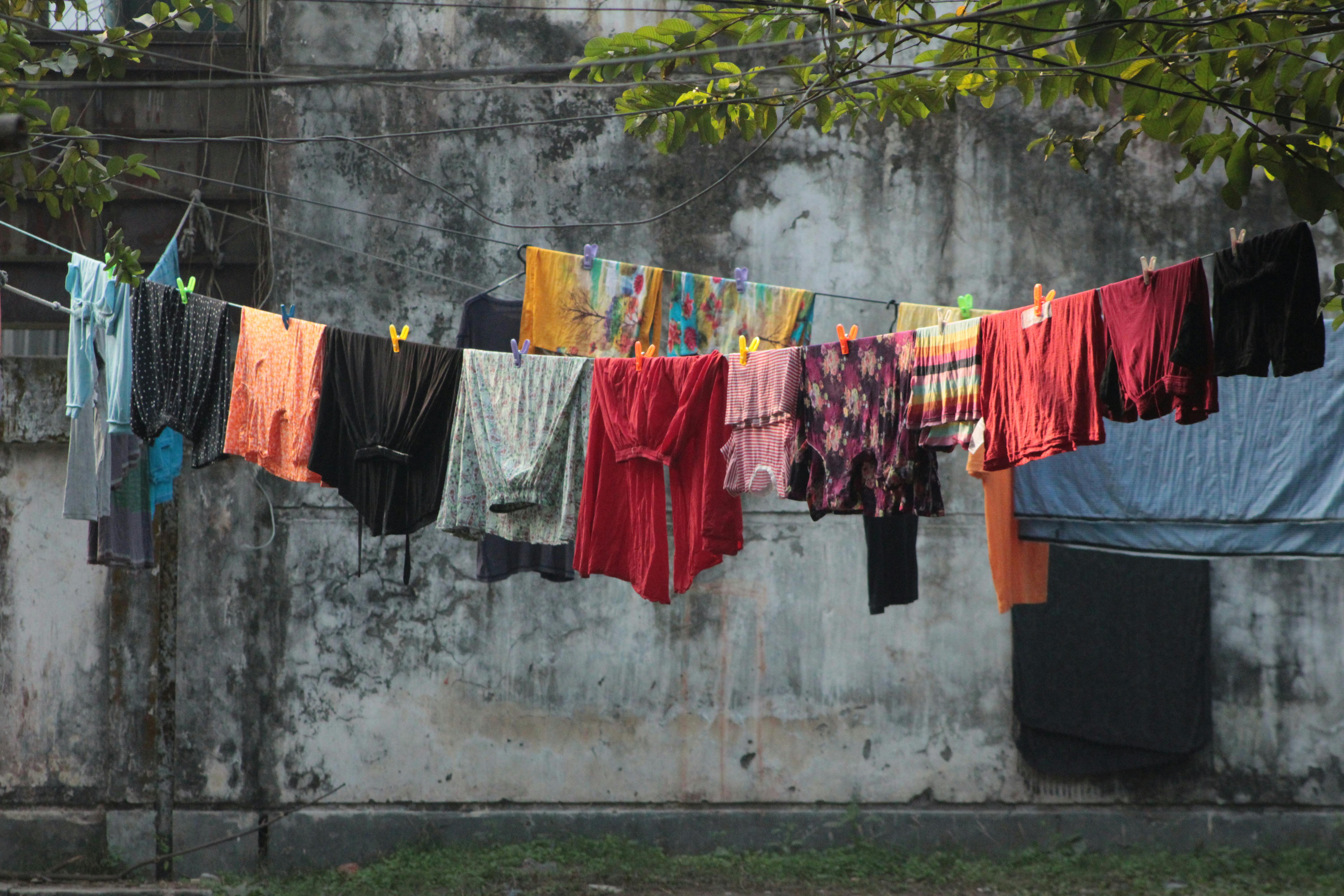
Garments that come out smaller are usually blamed on the wash. The mechanism that actually shrinks most clothing is the combination of heat and mechanical action during drying.
Relaxation shrinkage happens once
Fibres are stretched under tension during spinning, weaving and finishing. Wetting releases that tension and the fabric returns toward its natural dimensions, which reads as shrinkage.
Heat accelerates the release substantially. A garment air-dried may lose very little, while the same garment tumbled hot loses noticeably more on the first cycle.
Pre-shrunk fabrics have had this done at the mill, which is why sanforised cotton behaves predictably. Untreated cotton and linen have the full relaxation still stored in them.
Wool shrinks by a different mechanism entirely
Wool fibres are covered in overlapping scales. Under heat, moisture and agitation those scales interlock and cannot be separated again, which is felting rather than shrinkage.
This is irreversible. A felted jumper has not contracted; its fibres have become mechanically entangled, and no amount of stretching will restore the original structure.
Because agitation is required, wool survives a still soak far better than a tumble. It is why wool care instructions concentrate on movement rather than on temperature alone.
Tumbling causes wear as well as shrinkage
The lint collected from a dryer is fibre removed from clothing. Every hot tumble cycle takes a small amount of material off the surface of the garments in it.
This is why frequently tumbled towels thin and why printed graphics crack. The mechanical abrasion is doing steady, cumulative damage independent of any dimensional change.
Lower heat with a longer cycle reduces the damage from temperature but not from tumbling. Removing garments while slightly damp reduces both, because the final drying is where fabric is hottest.
Air drying has its own failure modes
Hanging heavy wet knitwear stretches it, because the weight of retained water pulls on the structure. Knits should be dried flat and supported across their whole area.
Direct sunlight fades dyes, particularly on cotton and on dark colours. Drying inside out is a simple correction that costs nothing.
Slow drying in still, humid air allows bacterial growth, which is the source of the characteristic stale smell. Airflow matters more than warmth for preventing it.
The garment's construction sets the method
Structured items with interlinings, such as jackets and stiffened collars, distort under heat because the layers shrink at different rates. They should not be tumbled at all.
Elastane loses recovery when heated repeatedly, which is why stretch garments go baggy after a year of tumbling. Air drying preserves the elastic behaviour far longer.
Sorting the wardrobe once into tumble, hang and dry-flat categories removes the decision permanently. Most of the damage attributed to washing machines is caused after the wash has finished.
Also by Noor Haddad
- Building a capsule wardrobe by subtraction rather than purchaseCapsule Wardrobe
- Cost per wear: the only shopping arithmetic worth doingShopping Smart
- Why some colours suit you: contrast and undertone, without the seasonsColour & Pattern
- Buying clothes secondhand online without being disappointedShopping Smart