Fabric & Care
Dry Cleaning: What The Solvent Actually Removes
Dry cleaning uses a liquid solvent instead of water, which changes what kinds of soil it can remove and explains why some marks survive the process entirely.
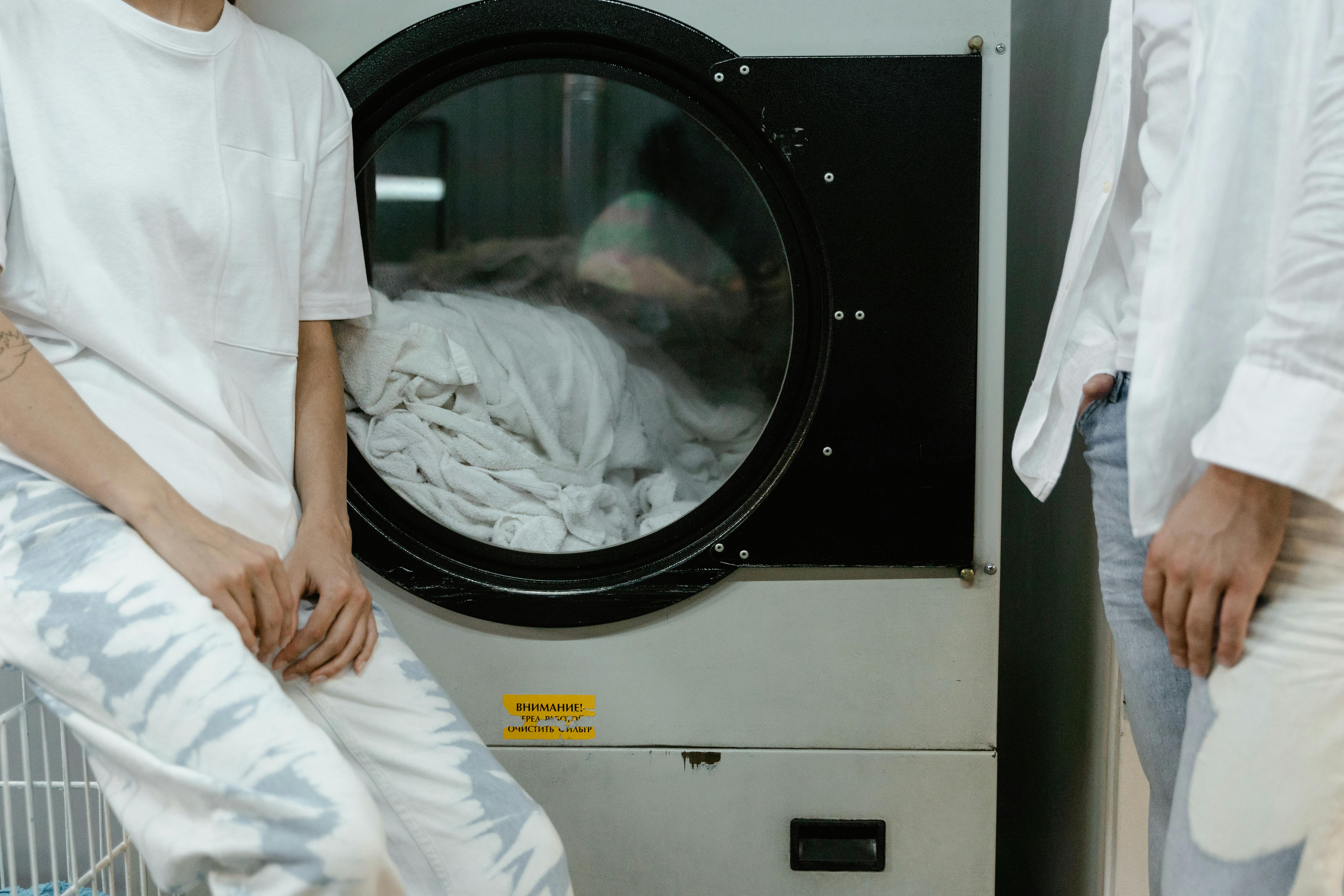
Dry cleaning is not dry, and understanding what it actually does explains why it succeeds on some garments and leaves others looking untouched.
A different liquid with different affinities
The garment is washed in a machine much like a front-loading washer, but the liquid is a chemical solvent rather than water.
Solvents dissolve oils and greases readily and water-based residues poorly. Water does the reverse, dissolving sugars, salts and most food staining.
So the process is a specialist rather than a superior version of washing, and a garment cleaned this way has had one class of soil addressed and another largely ignored.
Why it is used on structured garments
The reason tailored clothing goes to a cleaner is not superior cleaning but the absence of water.
Water swells natural fibers, causing shrinkage, and it relaxes the interfacings, canvas and padding that give a jacket its shape.
Solvent does not swell fibers in the same way, so a garment with internal structure comes out with its shape intact, which water would compromise permanently.
Spotting is a separate manual step
Water-soluble stains are treated by hand before or after the machine cycle, using steam, water and specific agents applied at the mark.
That work is skilled and takes time, so it varies far more between establishments than the machine cycle does.
Pointing out and identifying a stain when dropping a garment off directly affects the outcome, since a spotter who knows what caused a mark can choose the right treatment.
The process is not gentle in every respect
Garments are still tumbled mechanically, and they are pressed afterward with heat and pressure, both of which cause wear.
Repeated cleaning flattens the nap of wool, shines the fabric at pressure points, and stresses buttons and trims.
This is why the standard advice for tailored clothing is to clean it as rarely as possible, relying on brushing, airing and pressing to handle ordinary use.
Reading the label as a floor, not a ceiling
A dry clean only label means the manufacturer has tested that method and not others, which is a liability position as much as a technical one.
Some garments carrying it are structurally simple and would survive careful hand washing, while others genuinely cannot get wet without ruin.
Construction is the guide: a lined, canvassed or heavily interfaced garment relies on the label, while an unlined single-layer piece in a stable fiber usually does not.
Also by Noor Haddad
- Building a capsule wardrobe by subtraction rather than purchaseCapsule Wardrobe
- Cost per wear: the only shopping arithmetic worth doingShopping Smart
- Why some colours suit you: contrast and undertone, without the seasonsColour & Pattern
- Buying clothes secondhand online without being disappointedShopping Smart