Fit & Tailoring
Darts, Seams And How A Flat Cloth Becomes A Shape
Garments are built from flat panels shaped by darts and curved seams, and understanding where that shaping sits explains why some fits can be adjusted and others cannot.
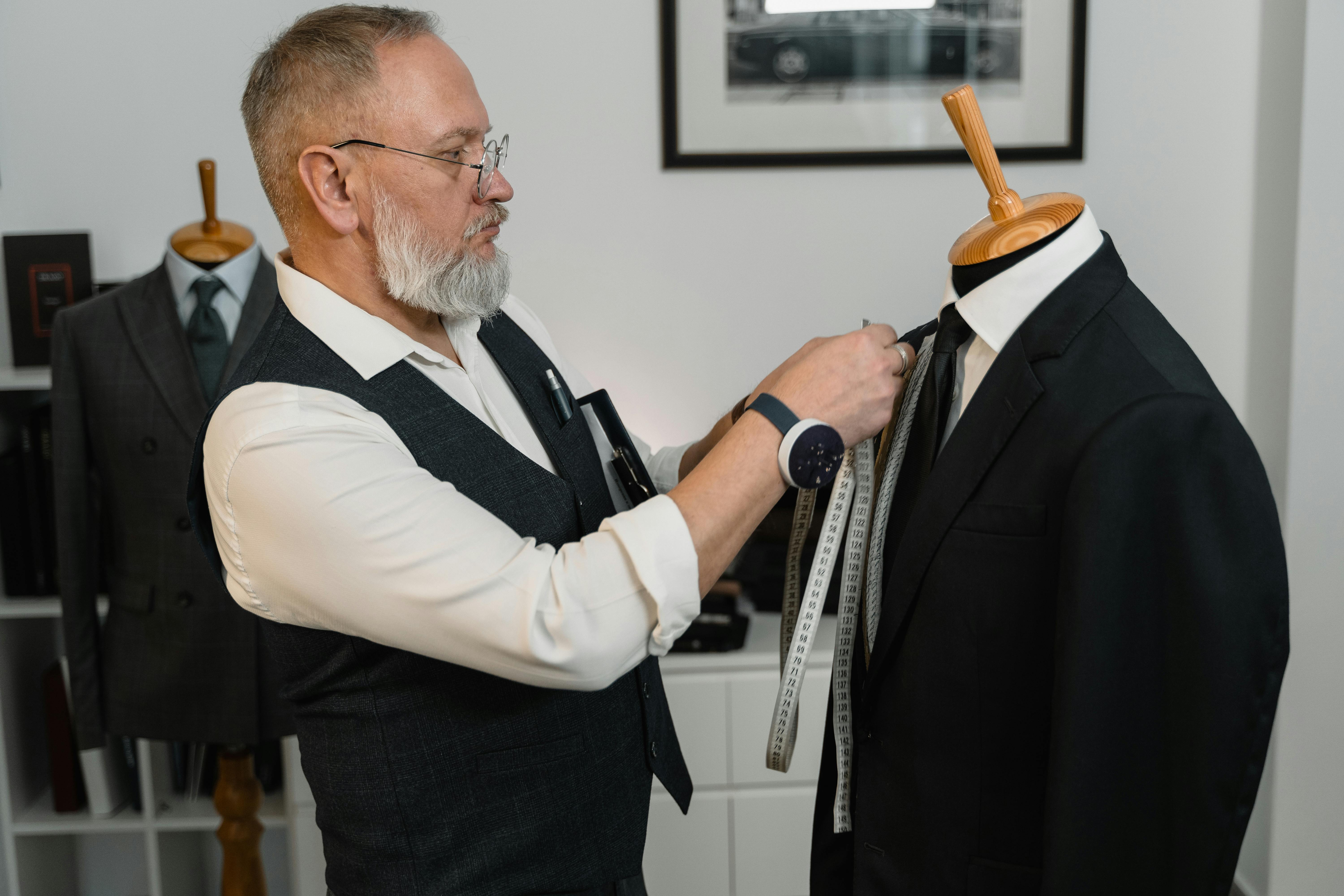
Every garment starts as flat cloth and has to be made to fit a three-dimensional body. The techniques that do this determine where a garment can be adjusted later.
A dart removes width to create depth
A dart is a wedge of fabric folded out and stitched down. Removing width at one point forces the surrounding cloth into a curve, which is how flat material acquires shape.
Bust darts, waist darts and shoulder darts all work identically and differ only in where the shaping is needed. Their position, not their existence, defines the resulting silhouette.
Because a dart is a fold of fabric, it can be deepened to take a garment in or reduced to let it out, within the limit of what the fold contains.
Seams can shape as well as join
A curved seam does the same job as a dart but distributes it along a line. Princess seams running from armhole to hem shape the whole torso continuously rather than at one point.
This is why some garments have more panels than seem necessary. Each additional seam is an opportunity to introduce shaping that a single flat panel could not carry.
More panels also mean more places to alter. A four-panel garment offers far more adjustment options than a two-panel one cut from wider pieces.
Where the shaping sits must match the body
A dart placed for an average figure points at where the fullness is expected to be. If the body's proportions differ, the dart points at the wrong place and the fabric puckers.
Adjusting this means moving the dart rather than resizing the garment, which is why some fit problems do not improve in any size.
The same applies vertically. A waist seam sitting above or below the natural waist changes the proportions of everything, and only relocating it fixes the appearance.
Unshaped garments fit differently by design
Some garments have almost no shaping: straight side seams, no darts, a rectangular body. They fit by draping rather than by following the figure.
These are more tolerant of size variation and less capable of precision. They will never look fitted, and attempting to alter them into a fitted shape usually fails.
Recognising which kind of garment is in front of you prevents a common disappointment: expecting a boxy cut to be tailored into a shaped one.
The construction predicts the alteration cost
Adjustments made at existing seams and darts are quick, because the tailor is repeating work that already exists in the garment.
Adjustments that require new shaping, moved seams or reconstructed panels are expensive, because they mean partially rebuilding what the manufacturer made.
Looking inside a garment before buying therefore answers a practical question. The number and placement of seams tells you how adaptable it will be.
Also by Noor Haddad
- Building a capsule wardrobe by subtraction rather than purchaseCapsule Wardrobe
- Cost per wear: the only shopping arithmetic worth doingShopping Smart
- Why some colours suit you: contrast and undertone, without the seasonsColour & Pattern
- Buying clothes secondhand online without being disappointedShopping Smart