Colour & Pattern
Colour In Accessories Versus Colour In Clothing
A colour behaves differently depending on the area it occupies, which is why a shade that overwhelms as a garment works well as a bag, scarf or shoe.

People often conclude that a colour does not suit them when the problem is quantity. The same shade in a small item and a large garment produce entirely different results.
Area amplifies saturation
A strong colour across a whole garment fills the field of view and dominates everything near it, including the face. The same colour in a small area registers as a detail.
This is why bright accessories are common and bright coats are not. The colour has not changed; the proportion of the outfit it occupies has.
The threshold is not fixed, but it falls as saturation rises. Muted colours can occupy large areas comfortably; intense ones cannot.
Distance from the face matters
Colour near the face reflects onto skin and sits in the same view as it. A shade that makes skin look sallow does so because of that proximity.
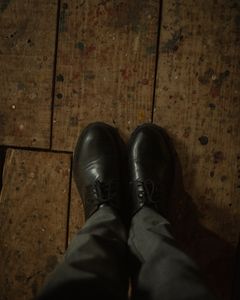
The same colour at the feet or in a bag has no such effect, because it is not in the same visual field as the face and reflects nothing onto it.
This explains the common pattern where someone can wear a colour in shoes and not in a shirt. The colour is fine; its position was the problem.
Accessories carry colour with lower commitment
A garment in a strong colour restricts what can be worn with it and is remembered by anyone who sees it, which limits how often it can be repeated.
An accessory in the same colour combines with a neutral wardrobe, changes the whole outfit and attracts no such memory. It can be used constantly.
This is the mechanism behind small wardrobes that do not look monotonous. The variation is carried by items that are cheap to own and easy to rotate.
Repetition creates coherence
A colour appearing once reads as isolated. The same colour appearing twice, in a scarf and a shoe or a bag and a detail, reads as an intentional scheme.
The repetition does not need to be an exact match. Related shades in two places connect more effectively than an exact match in one.
Three occurrences begins to look laboured. Two is the point where the eye registers a decision without registering a system.
Materials shift the same colour
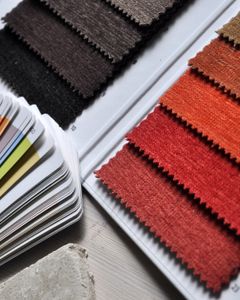
Colour on leather, on a matte fabric and on a glossy surface look different because the surface reflects light differently before any dye is involved.
A leather bag and a wool scarf in nominally the same shade will not match. Between accessories that is usually acceptable and often better than an exact pairing.
It becomes a problem only where an exact match is expected, such as between shoes and a belt. Everywhere else, the variation is what makes the repetition look natural.
Also by Noor Haddad
- Building a capsule wardrobe by subtraction rather than purchaseCapsule Wardrobe
- Cost per wear: the only shopping arithmetic worth doingShopping Smart
- Why some colours suit you: contrast and undertone, without the seasonsColour & Pattern
- Buying clothes secondhand online without being disappointedShopping Smart