Shoes & Accessories
Grooming and clothing: the parts that interact
A well-chosen outfit is undermined by the same small number of things every time, and most of them are within a few centimetres of the collar.
This is not a grooming guide. It is a short list of the places where grooming and clothing intersect, because these are the details that determine whether a considered outfit reads as considered.
The collar zone
Everything within about ten centimetres of the collar is looked at during a conversation, because that is where the face is.
Hair on the collar. Loose hair, dandruff and pet hair all show most on dark fabrics and at the shoulders. A clothes brush kept by the door solves it in ten seconds and almost nobody has one.
Collar condition. A shirt collar that is grey, frayed at the fold, or has lost its shape undermines the whole shirt. This is the first part of a shirt to fail and the most visible.
Visible undershirt. A crew-neck undershirt visible at an open collar is one of the more commonly noticed errors. A v-neck undershirt or none avoids it.
Antiperspirant and fabric
The interaction that ruins the most shirts.
Yellow underarm staining is a reaction between perspiration and the aluminium salts in antiperspirant. It builds gradually, sets permanently, and is the reason white shirts are discarded while otherwise intact.
Practical responses: apply antiperspirant at night, when sweat glands are less active, which improves effectiveness and reduces residue transferred to clothing. Let it dry fully before dressing. Wash shirts promptly rather than leaving them. And treat the underarm area before washing if staining has begun, with an oxygen-based product or a bicarbonate paste.
Aluminium-free deodorants do not cause the yellowing, and do not prevent sweating either, which is a trade-off rather than a solution.
Apply fragrance to skin, not clothing. Oils stain silk and pale fabrics, and alcohol degrades some dyes over time. Fragrance also develops differently on fabric — the top notes evaporate and the base notes linger for far longer than intended, which is why a jacket can smell of a fragrance you wore last week.
Apply before dressing, to pulse points, and let it dry.
Hands and nails
Visible constantly, in every gesture, and at close range during any interaction involving passing something, shaking hands, or using a keyboard.
Clean and trimmed is the entire requirement for most contexts, and it is noticed more than most people expect — particularly in any setting involving handling documents, food or objects.
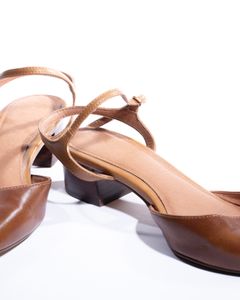
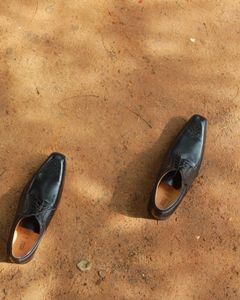
Shoes
Not grooming exactly, and it belongs on the same list because it fails the same way: a small, visible detail that undermines everything above it.
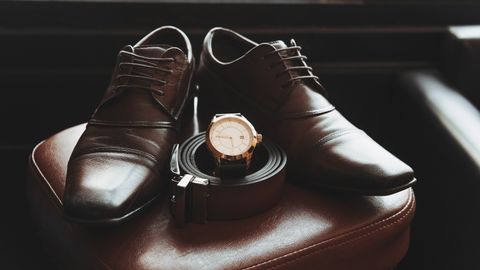
Scuffed toes, worn-down heels and dirty soles are all noticed. A brush and a cloth by the door takes fifteen seconds and does most of the work.
Worn-down heel tips are the specific failure — they are cheap to replace and, left long enough, damage the shoe structurally.
Facial hair and collars
A specific interaction. A beard that overlaps a shirt collar reads as untidy regardless of how well groomed it is elsewhere, because the boundary is visible against the fabric.
The neckline is the part most often neglected, and it is the part that sits directly against the collar.
Glasses
Worn on the face, therefore in every photograph and every conversation.
Clean them. Marked lenses are extremely visible to others and invisible to the wearer, who has stopped noticing.
Fit matters. Frames sliding down the nose, or sitting crooked, are adjustable free at any optician and almost nobody goes.
The maintenance items worth owning
A clothes brush. A lint roller. A fabric shaver for knitwear. A shoe brush and cloth. A small sewing kit. A stain pen for immediate treatment.
Total cost is trivial, and between them they address most of the things that make otherwise good clothing look neglected.
The general principle
The details that undermine an outfit are almost never the large decisions. They are small, cheap to fix, and invisible to the person wearing them precisely because they have stopped seeing them.
Which is why the most useful habit is a full-length mirror by the door and a deliberate ten-second look — not at the outfit, which you already decided on, but at the collar, the shoulders, the shoes and the hands.
Also by Noor Haddad
- Building a capsule wardrobe by subtraction rather than purchaseCapsule Wardrobe
- Cost per wear: the only shopping arithmetic worth doingShopping Smart
- Why some colours suit you: contrast and undertone, without the seasonsColour & Pattern
- Buying clothes secondhand online without being disappointedShopping Smart