Shopping Smart
Why The Same Garment Costs Four Different Prices
Identical clothing sells at widely different prices across channels because retail pricing reflects distribution costs and expected discounting rather than what production actually cost.

The same garment can appear at four prices in the same week across different sellers. The spread is not arbitrary, and understanding it changes when and where you buy.
The list price is a starting position
Full retail price is set with discounting already anticipated. Retailers plan a season around a markdown curve, and the opening price has to leave room for that decline.
This means the first price is rarely the price the garment is expected to sell at in volume. It is the price for the small share of buyers who want it immediately.
Knowing this reframes early-season shopping. Paying full price buys availability, size range and choice, which are real benefits, but not the best price the item will reach.
Channel costs differ enormously
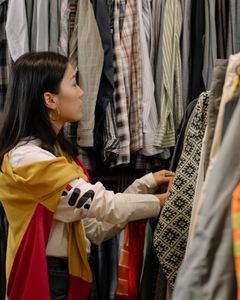
A garment sold in a city-centre shop carries rent, staff and fitting rooms. The same garment sold from a warehouse carries packing and shipping, which is a different and often lower cost.
Returns cut the other way. Online clothing sees high return rates, and processing, restocking and unsellable returns are absorbed into the price everyone pays.
The result is that neither channel is reliably cheaper. Each is cheaper for different categories, and the difference tracks how likely the item is to be sent back.
Wholesale and direct pricing diverge
A brand selling through department stores prices to leave the retailer a margin. Selling the same item on its own site removes that layer, which can show up as a lower price.
Often it does not, because brands avoid undercutting the stores that stock them. Instead the direct channel offers exclusives, wider sizing or earlier access at the same figure.
Where the direct price is genuinely lower, it usually indicates the brand has reduced its wholesale reliance. That shift has been happening steadily across the industry.
Outlet stock is often a separate product
Some outlet goods are genuine end-of-season leftovers. A substantial share is manufactured specifically for outlet sale, at lower cost, and never appeared in the main range.
The differences are usually in fabric weight, lining, stitch density and hardware. The design and the label are the same, which is what makes the comparison misleading.
Checking the garment itself rather than the discount percentage is the only reliable test. Made-for-outlet stock is identifiable by feel and construction if you look for it.
Timing beats hunting
Chasing the lowest current price across channels absorbs a lot of effort for a modest gain. Waiting for a known markdown point produces a larger one with almost none.
The cost of waiting is size availability, which falls quickly on popular items. For standard sizes in staple garments that risk is low; for unusual sizes it is high.
Matching the approach to the item is the practical conclusion. Buy staples on the markdown curve and buy hard-to-fit items early, at full price, without regret.