Shopping Smart
Understanding brand tiers: what you are paying for
The gap between a £40 shirt and a £400 one is partly construction, partly materials and substantially marketing. Knowing which is which lets you buy in the right tier for each item.
Clothing price does not scale with quality in a straight line. It scales steeply at the bottom, then flattens, then rises again for reasons that have little to do with the garment.
The tiers, and what changes between them
Budget. Lightweight fabric, short-staple or synthetic fibres, low stitch density, fused interlinings, raw or overlocked seams, narrow allowances, no pattern matching, unbranded fastenings. Designed for a short life.
Mid-market. This is where the largest quality improvement per pound occurs. Better fabric weight and composition, higher stitch density, better finishing, occasional pattern matching, some inlay. A well-chosen mid-market garment is frequently indistinguishable in construction from something several times the price.
Premium. Better fabrics again — long-staple cotton, higher-grade wool, two-ply yarns. Half or full canvas construction in tailoring. Better fastenings. More careful fit development. Diminishing but real returns.
Luxury. The best available materials, hand finishing on some elements, small production runs, and a substantial component of brand, retail environment, marketing and margin. Construction may or may not exceed premium; sometimes it does not.
The improvement from budget to mid-market is large. From mid-market to premium it is real but smaller. From premium to luxury it is frequently marginal in construction terms and substantial in price.
Which is why the highest-value strategy for most people is buying carefully in the mid-to-premium range rather than either extreme.
What price does not tell you
Where it was made. Luxury and budget goods are frequently made in the same countries and occasionally the same facilities.
Construction quality. Fused jackets are sold at every price point, including several where they should not be. Low stitch density appears on expensive garments.
Labour conditions. Price does not correlate reliably with how workers were treated. Certifications address this; price does not.
Durability. A heavy mid-market wool coat will outlast a lightweight luxury one.
What premium price often does buy
Being fair about it.
Fabric. The genuine and consistent difference. Better mills, better fibre, better finishing. This is visible and feelable and it does affect longevity.
Fit development. More fittings, better pattern grading, more consistent sizing across a range.
Service. Repairs, alterations, resoling, and the expectation that a garment will be maintained rather than replaced.
Consistency. A brand that fits you will keep fitting you, which is worth a great deal in practice.
The specific categories worth spending on
Outerwear. Worn constantly, expensive to make well, and the quality difference is large.
Shoes. The only footwear category that can genuinely be repaired and kept is welted construction, and it is not available cheaply.
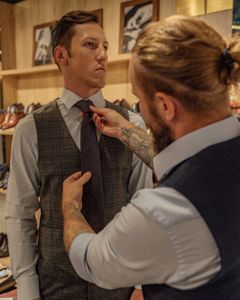
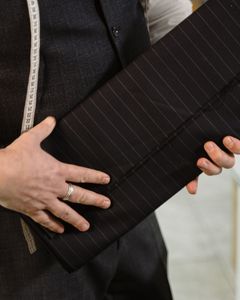
Tailoring. Canvas construction versus fusing is a real and permanent difference.
Knitwear. Fibre quality and staple length determine whether it pills into uselessness in a season.
Where spending more returns little
T-shirts and basics above a modest threshold. Fabric weight matters and the returns flatten quickly.
Trend pieces, whose useful life is short by definition.
Anything you will wear rarely. Cost per wear governs, and hiring is a serious option for genuinely rare requirements.
Logo-driven items, where the price is the logo.
Outlet and diffusion lines
Worth knowing about specifically.
Many brands produce made-for-outlet lines at lower specification rather than discounting main-line stock. These are new products at a lower construction standard, priced with a notional original that never applied.
Diffusion lines — a designer's secondary label — are similar: the name at a lower specification.
Neither is dishonest exactly, and neither is what most customers assume they are buying. Check the construction rather than the label.
The practical approach
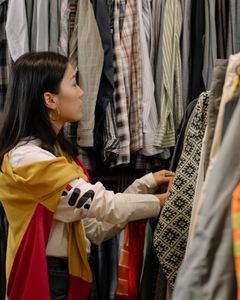
Inspect rather than infer. The two-minute check — stitch density, pattern matching, seam finishing, grain, interlining — applies at every price point and is more likely to surprise you at the top than at the bottom.
Then buy in the tier that matches how much you will wear the thing, and put the difference into alterations, which improve any garment at any price more reliably than moving up a tier does.